
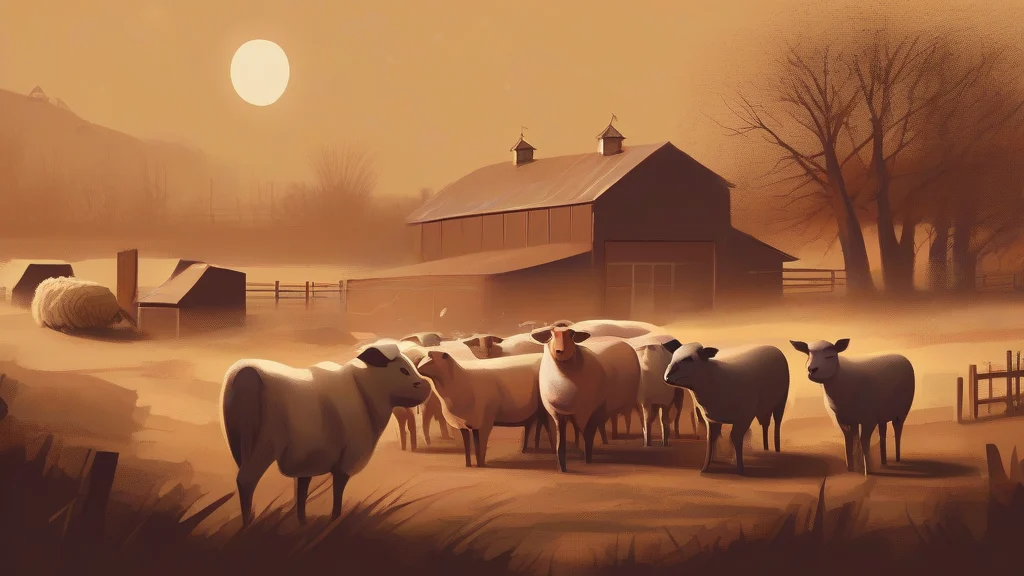
What does livestock mean?
Livestock is the collective term for animals kept on farms or ranches for agricultural purposes. The category commonly includes cattle, sheep, pigs, goats, and other animals raised for meat, milk, eggs, wool, leather, breeding, or labor. Unlike a word such as “cattle,” which names one specific kind of animal, “livestock” emphasizes the group of domesticated animals maintained as part of agriculture. It appears frequently in discussions of farming, rural economies, food production, veterinary care, animal disease, land use, and environmental impact. In expressions such as “raise livestock,” “livestock farming,” and “livestock emissions,” it can refer either to the animals themselves or, more broadly, to the agricultural practice surrounding them. The term is standard in both British and American English, with differences mainly in usage and agreement rather than meaning.
nounFarm animals kept for agricultural purposes, such as producing meat, milk, eggs, wool, or other goods, or for work. The term may also refer collectively to the animals kept on a farm or ranch.
- Farm animals collectively, especially those kept for meat, milk, eggs, wool, breeding, or work.
- The industry or business of raising such animals, when the word is used in an institutional or economic context.
"The family raises livestock on its small farm in the countryside."
"Livestock feed prices rose sharply during the drought."
"The museum offers a clear introduction to the history of livestock farming in the region."
The standard plural form is unchanged. Traditional usage favors plural agreement, while modern formal usage often treats livestock as a mass noun with singular agreement.
"The livestock are being treated for a seasonal illness."
Livestock is literally “live stock”: animals kept alive as part of agriculture, providing food, materials, and labor.
Reviewed by Deb Chak, Editor. AI-assisted content curated by RJS Tech Solutions LLP.
Where does livestock come from?
Livestock is an English compound formed by joining “live” and “stock.” In this formation, “live” means alive or living, while “stock” refers to animals or property kept for use. The underlying elements have Germanic roots, and the compound developed as a specialized agricultural term for animals kept alive for work or production.
How livestock is actually used
The word is most often used in agricultural, economic, and environmental contexts. It is generally neutral in tone, though discussions of intensive livestock farming can carry environmental and animal-welfare connotations. In formal writing, agreement may be singular, as in “livestock is raised for export,” or plural, as in “the livestock are moved to higher ground.”
Easily confused with livestock
Cattle refers specifically to domesticated bovines, whereas livestock is a broader term covering farm animals such as cattle, sheep, pigs, goats, and horses.