
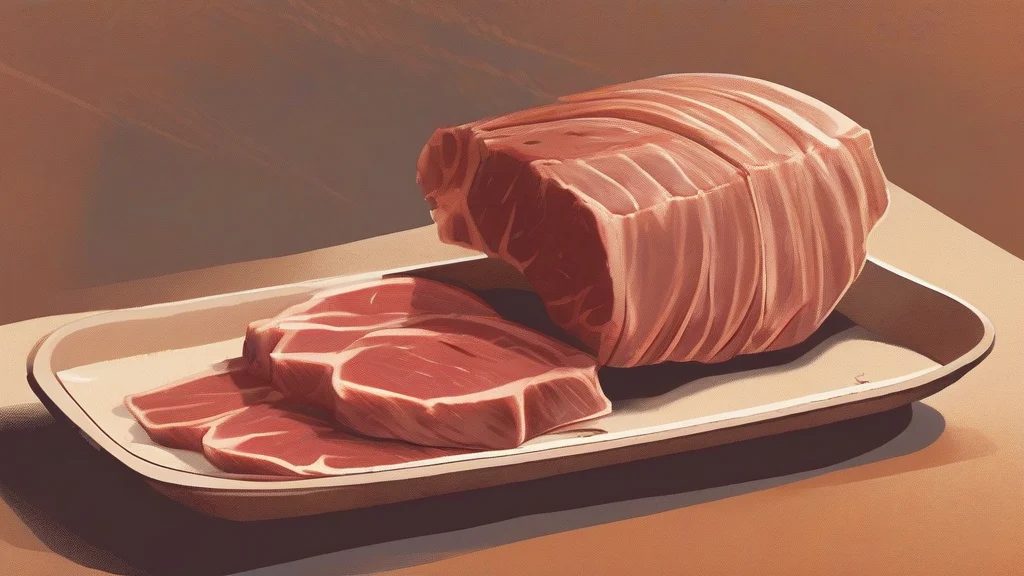
What does loin mean?
Loin most often names a cut of meat from the back or side of an animal, especially pork. The unqualified word is familiar from phrases such as pork loin, while a sirloin or tenderloin identifies a more particular cut. In British and American English, loin also appears in loincloth, a narrow strip of cloth worn around the waist, and in literary or biblical language “loins” may indicate the lower back or the body’s reproductive or generative power. As a result, the word carries both culinary and bodily associations rather than suggesting only a modest side cut. Modern usage is practical: a butcher may discuss a pork loin, while a museum label may identify a loincloth. The compact word is also worth remembering because its modern culinary sense and its garment sense derive from an older term for the side or waist of the body.
nounA cut of meat from the back or side of an animal, especially pork. The word can also denote a narrow strip of cloth worn around the waist or, in literary usage, the lower back or side of the body.
- A cut of meat from the back or side of an animal, especially pork.
- A strip of cloth worn around the waist, usually in the compound loincloth.
- In literary or archaic usage, the lower back, side of the body, or waist.
"The butcher roasted the pork loin with herbs and served it with roasted vegetables."
"A slice of the pork loin was crisp and golden after grilling."
"The statue is shown wearing a narrow loincloth around his waist."
The plural is loins. A cut of meat is normally named in the singular in modern culinary usage, while the plural is used for several cuts or in literary references to the body.
"The butcher roasted two pork loins for the banquet."
Loin has a misleadingly innocent sound: it names a substantial cut of meat as readily as the strip of cloth worn around the waist.
Reviewed by Deb Chak, Editor. AI-assisted content curated by RJS Tech Solutions LLP.
Where does loin come from?
The word entered Middle English as loine or loyn through Old French loigne, ultimately from Vulgar Latin *launa. The Old French term referred to the side of an animal’s body from which meat was cut, before the English word became established for a cut of meat itself. The same Latin root underlies words such as lone, lonesome, and lonely, although their meanings developed along separate lines.
Related word forms
How loin is actually used
References to the loins as the lower back or as a symbolic place of strength, sexuality, or reproduction are chiefly literary, biblical, or historical. The clothing sense now normally occurs within the compound loincloth.
Easily confused with loin
Loin is a cut of meat or a waist garment, whereas lone means solitary and is pronounced differently.