
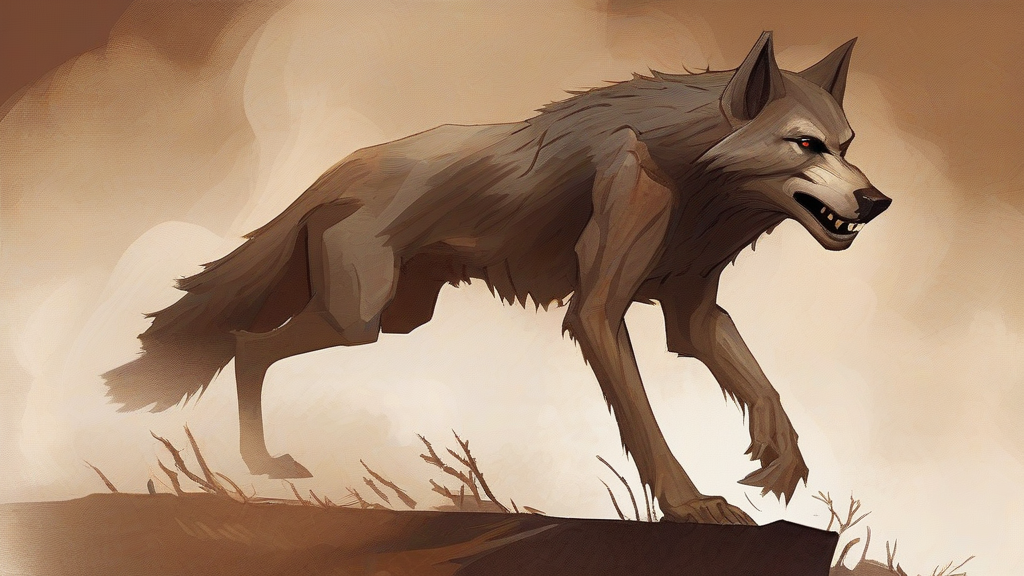
What does lycanthrope mean?
A lycanthrope is a person believed or portrayed as transforming into a wolf, especially in folklore, mythology, and fiction. The word also has a historical clinical association with lycanthropy, a rare delusional belief that one has taken on an animal form, particularly that of a wolf. In modern writing, lycanthrope is often more formal or antiquated than the familiar term “werewolf,” and it can carry a stronger sense of mystery, folklore, or literary atmosphere. Its origins are unusually transparent: the name combines Greek elements meaning “wolf” and “human.” This makes it a useful word for discussing traditional transformations, fictional shapeshifters, and the historical intersection of folklore and medicine. It is also notable for its compactness, naming a creature and its transformation in a single term that has remained recognizable from early modern English to the present.
nounA person believed or portrayed as transforming into a wolf, especially in folklore, mythology, and fiction. In historical clinical usage, the term can also refer to someone affected by lycanthropy, a delusional belief in such a transformation.
- A person in folklore, mythology, or fiction who transforms into a wolf or wolf-like creature.
- Historically, a person believed to be experiencing a delusional transformation into an animal, especially a wolf.
"The villagers suspected the mysterious hermit of being a lycanthrope and barred their doors before nightfall."
"The novel describes a lycanthrope who tries to control the transformation that overtakes him under the full moon."
"The case was discussed in an early account of what was then called lycanthropy, a rare delusional condition."
The regular plural is rarely needed because the word is uncommon outside literary, folkloric, and historical-clinical contexts.
"The stories describe several lycanthropes haunting the northern mountains."
Its name literally joins the Greek words for “wolf” and “human,” capturing one of folklore’s most enduring images in a single term.
Reviewed by Deb Chak, Editor. AI-assisted content curated by RJS Tech Solutions LLP.
Etymology of lycanthrope
The English word comes through Latin lycanthropus, a Latinized form of Greek lykanthrōpos, meaning “wolf-human” or “wolf-man.” Greek lykanthrōpos was formed from lykos, “wolf,” and anthrōpos, “human.” The word entered English in the early 17th century and was later associated with both folklore and medical accounts of lycanthropy.
How lycanthrope is actually used
The word is chiefly literary, folkloric, or historical-clinical. In ordinary usage, “werewolf” is much more common; “lycanthrope” often sounds more formal or antiquated.
Easily confused with lycanthrope
Werewolf is the familiar English name for the folklore creature, while lycanthrope is a more formal or literary term and can also be used in historical clinical discussions of the delusion known as lycanthropy.