
What does majolica mean?
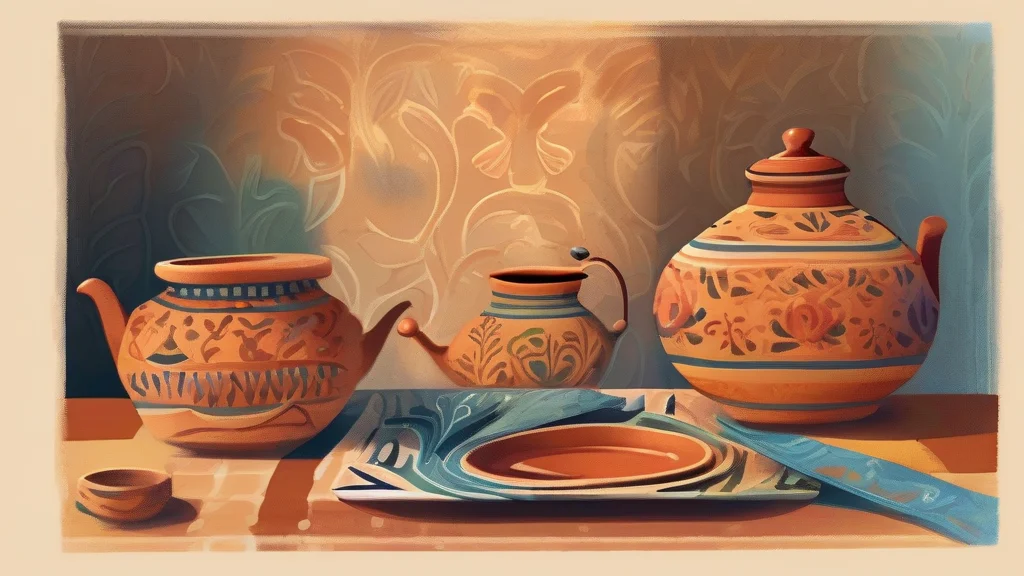
Majolica is a form of tin-glazed earthenware distinguished by painted decoration in vivid colors, especially blue, yellow, green, purple, and brown. The glaze is applied over an opaque white coating, creating a bright surface for intricate patterns of flowers, geometric ornaments, figures, and landscapes. Majolica became especially associated with Italian pottery, although glazed earthenwares with comparable characteristics were produced in several European regions. Today, the term appears most often in museums, antique collections, and discussions of decorative ceramics. It may refer either to the material itself or to individual decorated objects, such as plates, tiles, bowls, or vessels. The name reflects the word's historical connection with Majorca, the English name for the Mediterranean island of Mallorca. Although related glazed ceramics may be described more broadly as faience, majolica specifically emphasizes the tin-glazed, painted technique.
nounTin-glazed earthenware, usually decorated with painted designs in vivid colors. The term can also refer collectively to objects made in this style.
- A type of tin-glazed earthenware decorated with colored patterns.
- Objects or decorative pieces made from this pottery.
"A collection of 18th-century majolica filled the cabinet with richly painted plates and jugs."
"The museum acquired a blue-and-white majolica plate from the nineteenth century."
"Her collection of majolica is displayed in the dining room."
Normally used only for individual pieces or distinct examples of majolica; the material is generally treated as an uncountable noun.
"The two majolicas had been displayed in different periods of the collection."
Majolica turns ordinary clay into a miniature canvas: its brilliant patterns survive because the decoration is sealed beneath a glossy glassy glaze.
Reviewed by Deb Chak, Editor. AI-assisted content curated by RJS Tech Solutions LLP.
Where does majolica come from?
The word entered English in the 16th century through French and Italian usage, with maiolica serving as an alternative spelling. Its name is traditionally derived from Majorca, the English name for Mallorca, where brightly painted glazed earthenwares were historically produced. Over time, the term became associated more broadly with decorated tin-glazed pottery, especially Italian wares.
Related word forms
How majolica is actually used
Majolica is primarily a historical or collectors' term. It is more common in discussions of ceramics, decorative arts, and antique pottery than in everyday speech.
Easily confused with majolica
Majolica is decorated pottery made with colored glazes, whereas mosaic is an image or surface assembled from small pieces of material.
Faience is a broader category of glazed ceramic material, while majolica specifically denotes tin-glazed earthenware, often painted with colored designs.