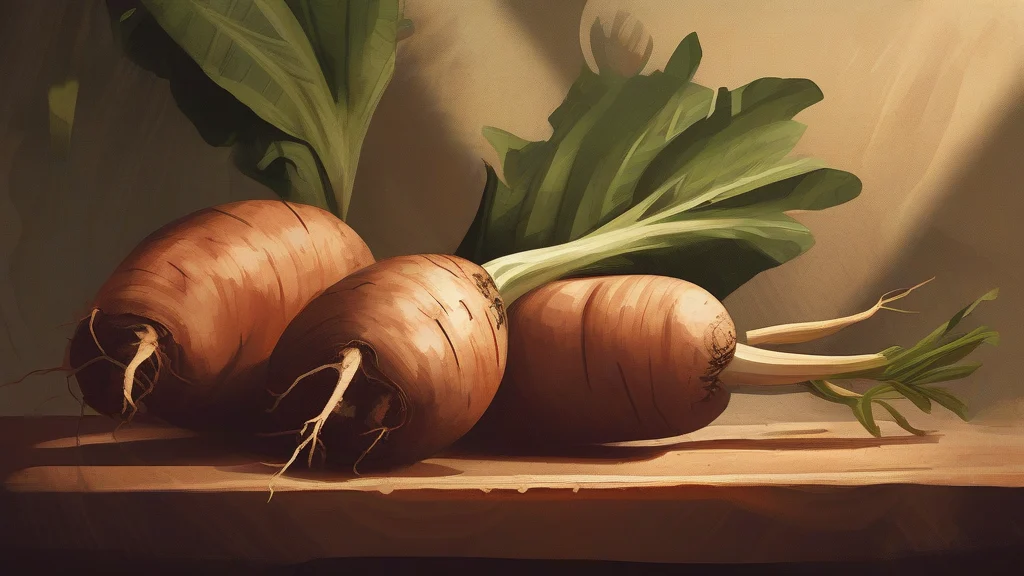
What does malanga mean?
Malanga is a type of root vegetable native to tropical America and the Caribbean. It is also known as cocoyam or tannia. The plant produces a starchy root that can be boiled, mashed, or fried. Malanga is a staple food in many Caribbean countries and is often used in traditional dishes. It has a nutty flavor and a firm texture. Malanga is rich in fiber, vitamins, and minerals, making it a nutritious addition to a variety of meals. The plant is relatively easy to grow and can thrive in a range of environments. Malanga is an important crop for food security in many regions. It can be used in soups, stews, and as a side dish.
nounMalanga is a type of root vegetable, also known as cocoyam or tannia, native to tropical America and the Caribbean.
- A type of root vegetable
- A plant that produces this root
"The recipe called for malanga to be boiled and mashed with garlic and butter."
"The farmer grew malanga in her garden."
"Malanga is a staple food in many Caribbean countries."
The plural form is used when referring to multiple roots or plants.
"The farmer harvested several malangas from her garden."
Reviewed by Deb Chak, Editor. AI-assisted content curated by RJS Tech Solutions LLP.
Etymology of malanga
The word 'malanga' is derived from the Taíno language, which was spoken by the indigenous people of the Caribbean. The Taíno people used the word 'malanga' to refer to the plant and its root. The word has been adopted into many languages, including Spanish, French, and English.
How malanga is actually used
Malanga is often used in Latin American and Caribbean cuisine, and can be found in some specialty stores in the US.