
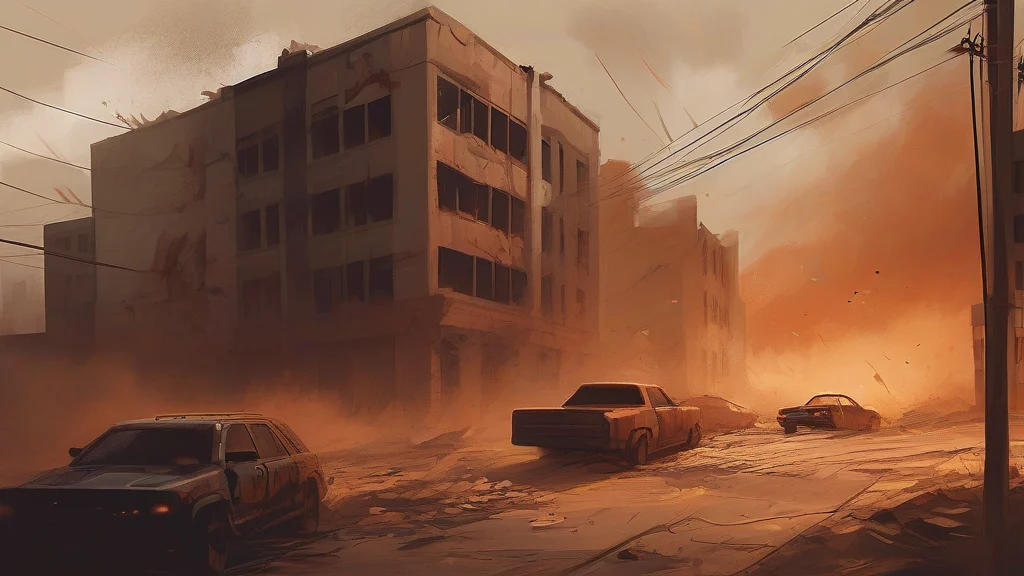
What does mayhem mean?
Mayhem means widespread disorder, confusion, or chaotic activity, usually with an emphasis on the scale and intensity of the disruption. It is often used for situations involving crowds, public events, emergencies, or frantic activity: a cancellation may cause mayhem, while a particularly disorderly celebration may be described as absolute mayhem. The word can refer both to an actual state of confusion and to the commotion surrounding an event. Because mayhem is vivid and dramatic, it is more common in journalism, informal speech, and accounts of memorable disorder than in highly formal legal or technical writing. It is a noun in both British and American English and is typically used with singular or mass usage, as in “in mayhem” or “cause mayhem.”
nounA state of extreme disorder, confusion, or chaos. It can also refer to chaotic or disorderly activity.
- A state of extreme disorder, confusion, or chaos.
- A period of frantic, chaotic activity or commotion.
"The unexpected announcement caused mayhem among the crowd."
"The city was in mayhem after the power failure shut down the transport system."
"The final seconds of the match produced mayhem in front of the goal."
The plural is uncommon; mayhem is usually used as a mass noun, especially in phrases such as “cause mayhem” and “in mayhem.”
"The report described several separate mayhems during the week of disruption."
From a word once associated with violent confusion, mayhem has become the standard expression for spectacular disorder—especially in headlines, sports, and everyday accounts of frantic commotion.
Reviewed by Deb Chak, Editor. AI-assisted content curated by RJS Tech Solutions LLP.
How mayhem is actually used
Mayhem is an informal but widely used noun. It often conveys a dramatic or vivid sense of confusion and disorder, rather than merely minor disruption.