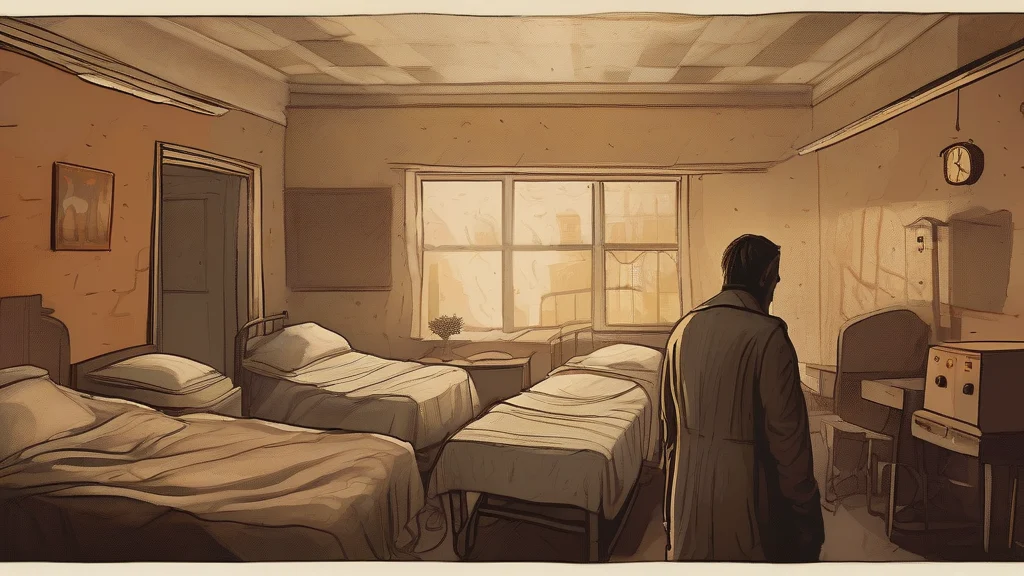
What does bedlam mean?
Bedlam means a scene of wild uproar, noise, and confusion — any situation so chaotic that order has entirely broken down. It functions as an uncountable noun, typically introduced by words like "the" or intensified by "complete" or "utter," as in "the announcement caused utter bedlam." The word's history is striking: it derives from Bethlehem, specifically the Hospital of Saint Mary of Bethlehem in London, an institution housing people with mental illness whose name was slurred over centuries into "Bethlem" and eventually "bedlam." By the seventeenth century the word had broadened from the hospital's name into a general term for any madhouse, and from there it came to describe pandemonium of any kind. Today bedlam is used chiefly figuratively and journalistically, evoking crowded markets on sale days, locker rooms after championship wins, or airports during travel disruptions. Its vivid sound and dramatic history make it a more colorful alternative to plainer words like chaos or confusion.
A scene of wild uproar and confusion.
"By the time the doors opened, the store was pure bedlam."
Uncountable; typically preceded by "the" or an intensifier such as "complete" or "utter."
(Historical) The Hospital of Saint Mary of Bethlehem in London, an infamous institution for people with mental illness; formerly, any similar asylum.
"In the eighteenth century, tourists paid to wander through Bedlam and stare at its residents."
Now historical; usually capitalized when referring to the specific hospital.
Rarely used in the plural; bedlam is almost always treated as uncountable in modern English.
"The old asylums were sometimes referred to as bedlams in nineteenth-century writing."
"Bedlam" is literally a hospital's name worn down by centuries of Londoners' sloppy pronunciation — the word for total chaos began as Bethlehem.
Reviewed by Deb Chak, Editor. AI-assisted content curated by RJS Tech Solutions LLP.
Etymology of bedlam
Bedlam originated as a popular contraction of "Bethlehem," the name of the Hospital of Saint Mary of Bethlehem in London, founded as a priory in the medieval period and later used as an asylum. The contracted form "Bethlem" appeared in English usage several centuries ago, and the further reduced spelling "bedlam" became established by the early modern period. From naming the institution itself, the word extended to mean any lunatic asylum, then acquired its dominant modern sense of a scene of uproar and confusion. It is thus a unique English formation rather than a borrowing cognate with other words, sharing its ultimate root only with the place name Bethlehem itself.
How bedlam is actually used
Bedlam is uncountable in its modern sense of chaos — it is not used with "a bedlam" in standard usage. It carries a vivid, somewhat informal or journalistic tone and often appears with intensifiers like "complete," "utter," or "absolute." Because of its origin in the history of psychiatric institutions, it can carry uncomfortable connotations when used carelessly about mental illness itself; it is best reserved for scenes of noisy confusion rather than descriptions of people.
Easily confused with bedlam
Bethlehem is the proper name of the biblical town (and the London hospital's original name), whereas bedlam is the common noun for chaos that derived from that hospital's name.