
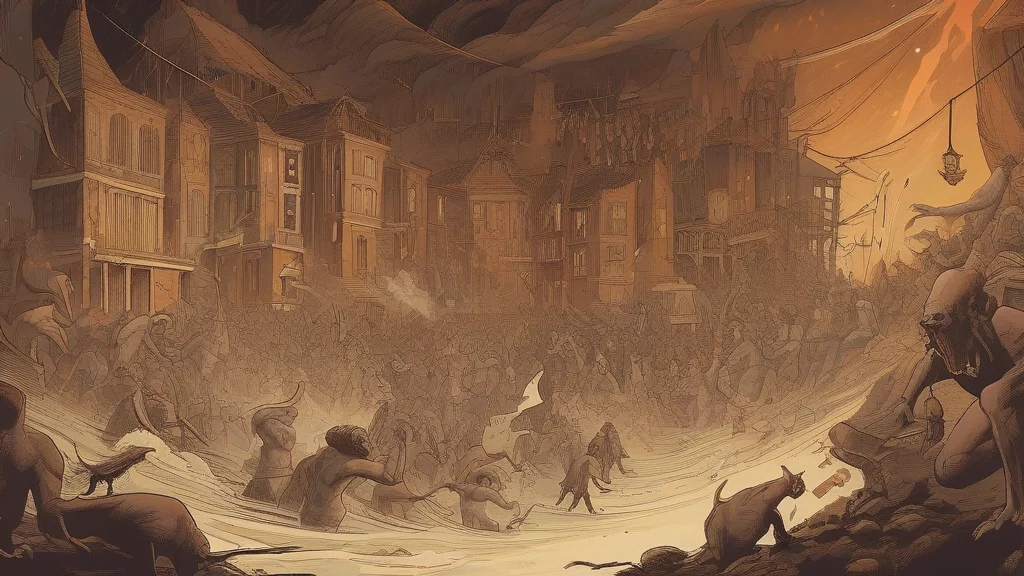
What does pandemonium mean?
Pandemonium means widespread disorder, confusion, and uproar, especially the kind produced by a crowd reacting intensely to an unexpected event. The word often evokes noise, excitement, confusion, and a lack of order rather than physical danger alone, though it can describe scenes of real disorder. Typical examples include a stadium erupting after a surprise victory or a political crisis producing frantic accusations and disruption. Its strong dramatic tone makes it especially effective in reporting and literary description. Although it can describe the behaviour of a large group, it may also be used more broadly for a chaotic situation in which many problems or changes occur simultaneously. The term originally referred to the realm of fallen angels in Hell, but it became established in English for human uproar and confusion.
nounWild disorder, confusion, or uproar, especially affecting a large group of people. It can also refer to a chaotic situation in which everything seems to be happening at once.
- Wild confusion, disorder, or uproar, especially among a large number of people.
- A chaotic situation in which many confusing or overwhelming things happen at once.
"The announcement caused pandemonium throughout the stadium as thousands of fans rushed toward the stage."
"The surprise result sparked pandemonium in the stands."
"The negotiation collapsed in a flurry of shouting and pandemonium."
The usual plural adds -s; pandemonium is also commonly used in the singular to refer to a collective state of disorder.
"The series of scandals created pandemoniums that dominated the news for weeks."
John Milton coined the word in the 17th century as the name of the capital of Hell, where the fallen angels gathered in a vast and terrible assembly.
Reviewed by Deb Chak, Editor. AI-assisted content curated by RJS Tech Solutions LLP.
Where does pandemonium come from?
The word comes from Greek, combining pan-, meaning “all,” with daimōn, meaning “spirit” or “deity,” and thus originally referred to the realm of all spirits. John Milton used Pandemonium as the name of the capital of Hell in Paradise Lost, published in 1667. The figurative sense for extreme confusion and uproar developed from its association with the noisy assembly of fallen angels.
How pandemonium is actually used
The word is strongly figurative and usually suggests a situation that is noisy, disorderly, and emotionally charged. It is commonly used in journalism and formal descriptions of public events, though it can also appear in everyday speech for comic emphasis.
Easily confused with pandemonium
A pandemic is a widespread outbreak of disease, whereas pandemonium describes widespread disorder, confusion, or uproar.