
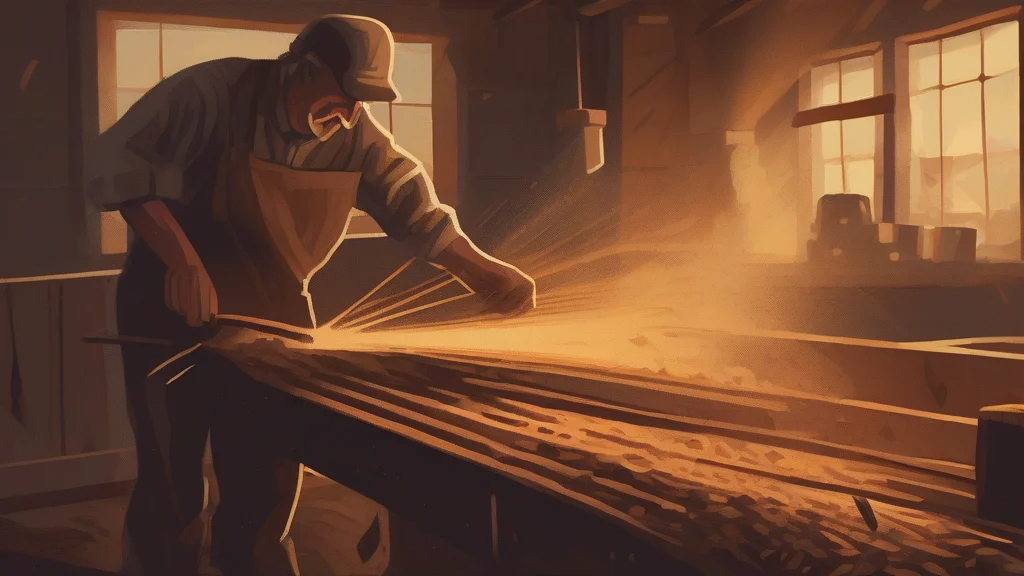
What does milling mean?
Milling most commonly denotes the mechanical process of cutting or grinding material into smaller pieces. In food production, for example, milling transforms grain into flour, while mineral milling reduces ore or rock into particles that may be sorted or processed further. The word can also name the material produced by such operations, especially particles or fine shavings. In a different, figurative use, “milling” describes people moving continuously in many directions: a “milling crowd” is not merely numerous but restless, shifting, and constantly in motion. This use is especially common in descriptions of busy public spaces, markets, stations, and halls. As the present participle of the verb “mill,” milling can likewise describe a machine at work or a person moving among a crowd. The word combines a precise industrial meaning with a vivid social description, making it useful in both technical and literary contexts.
The process of cutting or grinding material into smaller pieces, especially grain, minerals, or metal; also material produced by such a process.
"The efficient milling of the grain reduced waste and improved the flour’s consistency."
The process is normally treated as an uncountable noun. “Millings” may refer to the material or particles produced by milling.
Moving in many directions within a crowd; numerous and constantly shifting.
"A milling crowd filled the station concourse as the delayed trains arrived."
Common in the expressions “milling crowd” and “milling about.” It suggests restless multidirectional movement rather than orderly motion.
The present continuous form of “mill,” meaning to grind or cut material into smaller pieces.
"The factory is milling grain around the clock to meet demand."
This is the -ing form of the verb and is normally used in continuous or participial constructions.
A relatively uncommon plural, used for milled material or separate products of a milling process; the process itself is usually described as uncountable.
"The quality inspector examined the millings before approving the shipment."
One word can describe both the careful reduction of grain to flour and a restless crowd moving in every direction.
Reviewed by Deb Chak, Editor. AI-assisted content curated by RJS Tech Solutions LLP.
Where does milling come from?
“Milling” was formed from “mill” by adding the present-participle ending -ing. “Mill” comes through Old English milne from Latin molina, a derivative of molere, meaning “to grind.” The same Latin root underlies words in several languages and also contributed to forms such as “molar” and “emollient.”
Related word forms
How milling is actually used
As a noun, “milling” is usually an uncountable process noun, although “millings” can refer to milled material. As an adjective, it commonly occurs in “milling crowd” or “milling about” and implies constant multidirectional movement. The verb form is used in continuous constructions and is somewhat literary.