
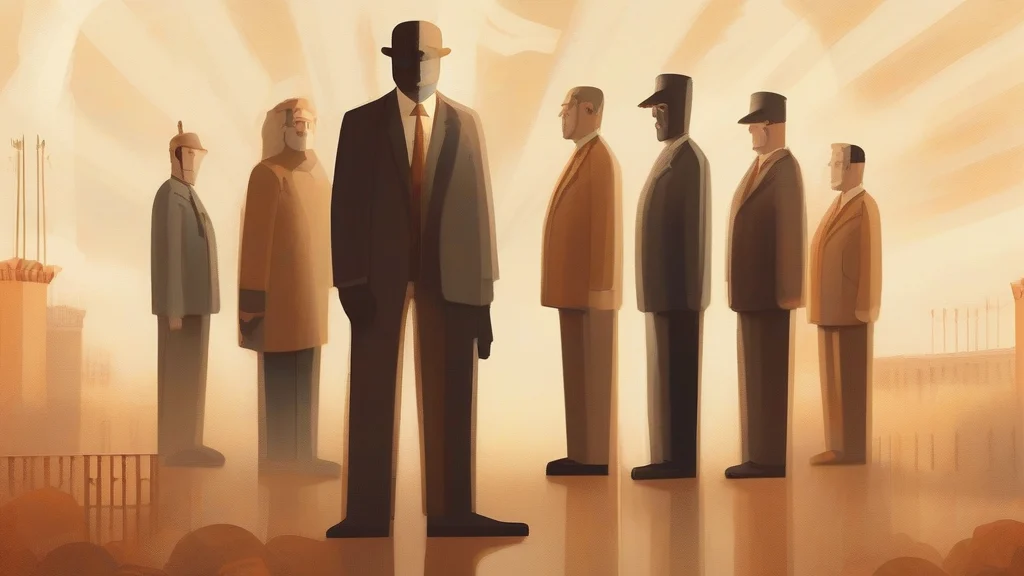
What does monocracy mean?
A monocracy is a form of government in which a single individual holds political authority. The word can refer either to a state ruled this way or to the general principle that governmental power is concentrated in one person. Unlike a conventional monarchy, a monocracy need not involve a hereditary ruler or a royal dynasty, and it need not be constitutional; it may arise from monarchy, dictatorship, military rule, or personal seizure of power. The term is uncommon in everyday speech but useful in political, historical, and academic discussion when emphasizing the one-person nature of a regime. It can sound formal and often carries negative or critical connotations, particularly when the ruler lacks legal constraints or political accountability. Related expressions include autocracy, despotism, and one-man rule, while democracy and oligarchy provide important contrasts.
nounA government or state ruled by a single person. The term can also refer more broadly to the principle or system of concentrating governmental power in one individual.
- A state or government ruled by a single person.
- A system or condition in which political power is concentrated in one individual.
"The country fell under a monocracy after the general seized power."
"The royal court had transformed the province into a monocracy under the prince's absolute control."
"Historians described the period as a period of political monocracy, with authority concentrated in the reigning family."
The plural is used when referring to multiple states or governments ruled by one person.
"The book compares the monocracies of two neighboring kingdoms."
Monocracy names the simplest possible concentration of state power: one ruler at the top, with no rival centre of authority.
Reviewed by Deb Chak, Editor. AI-assisted content curated by RJS Tech Solutions LLP.
Where does monocracy come from?
Monocracy comes from Greek monos, meaning “single,” and -kratia or kratos, meaning “power” or “rule.” The word reflects the same broad Greek vocabulary seen in democracy, oligarchy, autocracy, and aristocracy. It entered English as a political term describing government by one person and has remained relatively uncommon compared with several of its companions.
Related word forms
How monocracy is actually used
Monocracy is a relatively uncommon and somewhat formal or scholarly term. It is more specific than autocracy in some usages, emphasizing the structure of government rather than merely the concentration of power.
Easily confused with monocracy
A monarchy is a system of government headed by a monarch, usually within a hereditary or constitutional framework, whereas a monocracy is any government in which power is held by one person.
Autocracy is a broader term for rule by one person without meaningful political accountability, while monocracy focuses specifically on the one-person structure of government.