
What does moor mean?
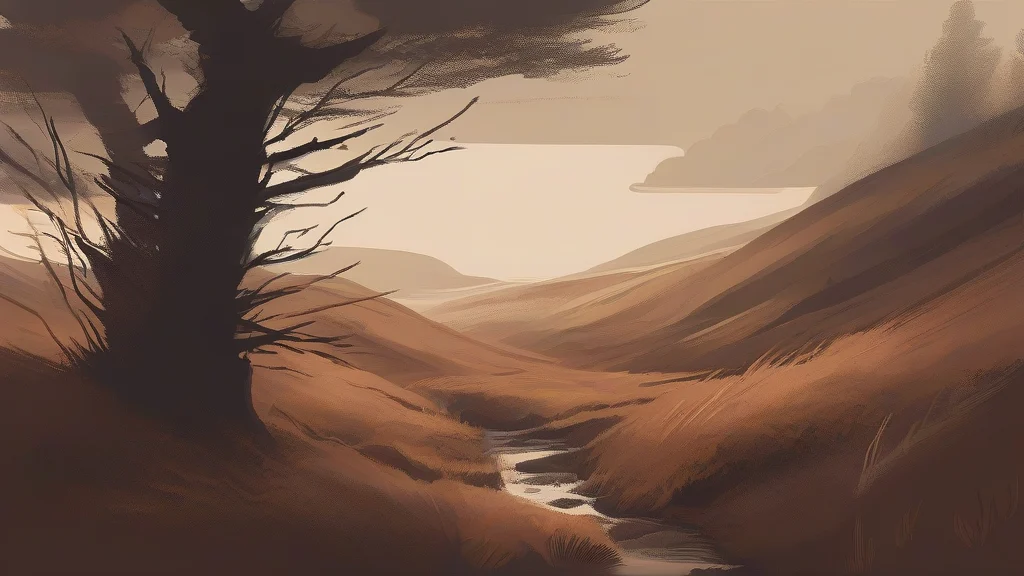
A moor is an open, uncultivated area of upland, often characterized by grasses, heather, peat, or rough vegetation. The word is especially associated with the rural landscapes and moorlands of Britain, but it is also used in American English. As a verb, to moor means to fasten a boat securely so that it remains in place, typically by attaching it to a dock, buoy, anchor, or another fixed point. The two senses are unrelated historically, although both belong to the vocabulary of land and maritime travel. In figurative contexts, “moored” can describe someone or something that has settled into a place, occupation, or condition. Together, the noun and verb evoke exposed countryside, isolation, and the practical language of boats and harbours.
An open area of uncultivated upland, typically covered with grasses, heather, peat, or rough vegetation.
"The moor is famous for its wildflowers and wandering ponies."
Common in British English and particularly frequent in descriptions of northern and western British uplands.
To fasten a boat or other vessel securely to a dock, buoy, anchor, or fixed object.
"They moored the small boat alongside the stone quay."
Primarily used in maritime contexts; related forms include “mooring” and “moorings.”
The plural is used when referring to multiple areas of moorland or individual uncultivated uplands.
"The route leads across several remote moors."
The word moor evokes Britain's broad, heather-covered uplands, while its verb meaning comes from the practical act of securing a boat against the movement of the tide.
Reviewed by Deb Chak, Editor. AI-assisted content curated by RJS Tech Solutions LLP.
Etymology of moor
The noun “moor” comes from Old English mōr, meaning an uncultivated upland or open waste, and is related to words in other Germanic languages. The verb “moor” developed in a maritime context from the idea of fastening a vessel in place, with the precise historical development less clearly documented than the noun's Old English ancestry. Modern usage reflects both the long-established landscape term and the practical vocabulary of mooring and unmooring vessels.
Related word forms
How moor is actually used
The noun is common in British English and in descriptions of rural or upland landscapes. The verb is used in maritime contexts; in computing, “mooring” can also mean a virtual resource attached to an active session.
Easily confused with moor
A moor is an uncultivated upland or an area of rough vegetation, whereas more means a greater quantity or amount.
A moor is a landscape or to fasten a vessel; a mure is an obsolete spelling of a wall or defensive barrier and is not normally used today.