
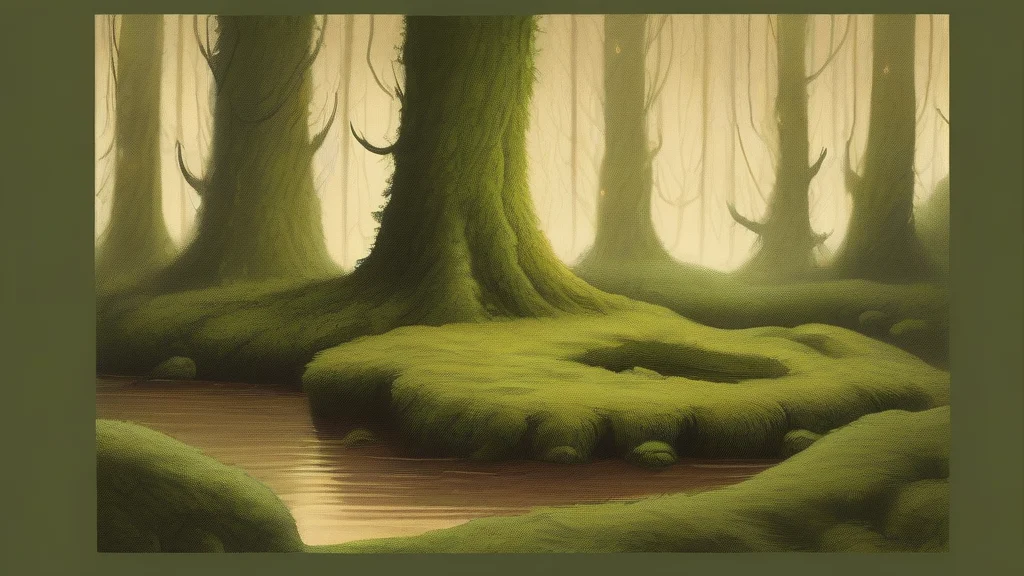
What does mossiness mean?
Mossiness is the noun form of “mossy,” meaning the condition of being covered, overgrown, or marked by moss. It describes both the visual quality of a surface and the presence or abundance of moss in a place. The word is especially associated with damp, shaded, and undisturbed environments such as forests, gardens, walls, and old buildings. Its ending “-iness” gives it an abstract, descriptive quality, making it useful when discussing a scene, place, or surface rather than referring to moss as a plant. Although grammatically ordinary, “mossiness” is less common than the adjective “mossy” and tends to appear in careful descriptive prose, literary contexts, or observations about the condition of landscapes and buildings.
nounThe state or quality of being covered, overgrown, or characterized by moss. It can also refer to the presence or abundance of moss in a particular place.
- The state or quality of being covered or overgrown with moss.
- The presence or abundance of moss in a place.
"The damp, wooded path had a pronounced mossiness that made it look almost unreal."
"Rain and shade contribute to the mossiness of the old garden wall."
"The report noted the mossiness of the woodland floor after weeks of damp weather."
Rarely used; the plural is generally needed only when discussing several distinct instances of mossiness.
"The guide described the mossinesses of the caves with obvious fascination."
Mossiness is the quiet, green sign that a place has been left undisturbed long enough for moss to take hold.
Reviewed by Deb Chak, Editor. AI-assisted content curated by RJS Tech Solutions LLP.
Etymology of mossiness
“Mossiness” is formed from “moss” with the suffix “-iness,” expressing the state or quality of being mossy. “Moss” is an English word inherited from Old English, where it referred to the plant and related vegetation found in damp, marshy ground. The modern noun belongs to the productive English pattern of forming quality nouns with “-iness,” as in “darkness” or “friendliness.”
Related word forms
How mossiness is actually used
This is a relatively uncommon noun. It is more often used in descriptive or literary writing than in everyday conversation.