
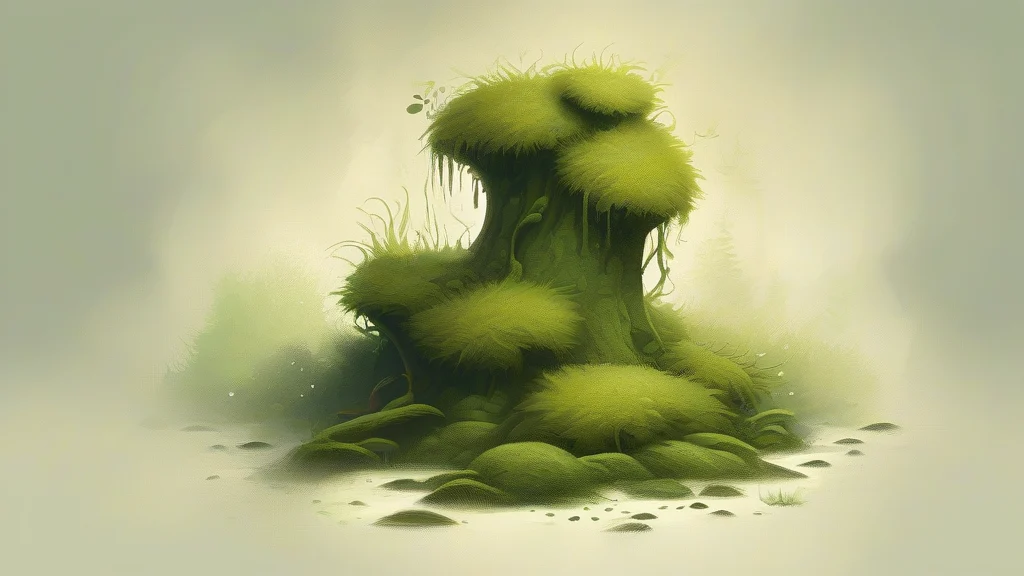
What does mossy mean?
Mossy is an adjective describing something covered with moss or having a character reminiscent of moss. Its literal use is especially associated with damp, shaded environments such as forests, gardens, old walls, stones, and tree trunks. A mossy surface is usually green and soft-looking, and the word can suggest age, quietness, and a lack of recent disturbance. In literary description, mossy may also evoke a mysterious, secluded, or long-established setting, as in a mossy castle or mossy path. The word derives from moss, whose English history goes back to Old Norse. Although mossy can be used broadly, it is most natural when the presence of moss is visually noticeable or when a place is being portrayed as damp, green, and untouched by recent activity.
adjectiveCovered with or characterized by moss. It can also describe something that is green, damp, and suggestive of old, undisturbed growth.
- Covered with moss or having a noticeable growth of moss.
- Green, damp, and suggestive of long-established natural growth.
"The path through the old forest was damp and mossy."
"After several rainy days, the garden walls were covered in green moss and felt distinctly mossy."
"The novel describes a mossy village where ivy hangs over the abandoned cottages."
Moss is a tiny plant with a huge visual presence: a single moss-covered tree can make an entire landscape feel ancient and mysterious.
Reviewed by Deb Chak, Editor. AI-assisted content curated by RJS Tech Solutions LLP.
Words that share this root
Related word forms
How mossy is actually used
The word is common in descriptive writing about landscapes, buildings, and objects associated with damp, shaded, or undisturbed places. In its extended sense, it can convey a nostalgic, mysterious, or old-fashioned atmosphere.
Easily confused with mossy
Moss is the plant or plant-like growth itself, whereas mossy is an adjective describing something covered with or resembling it.