
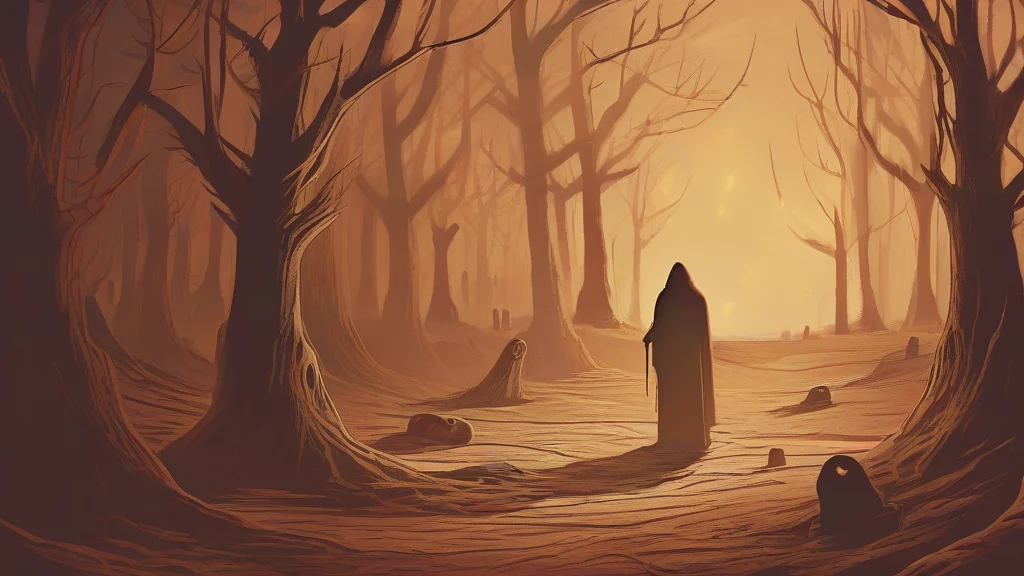
What does necromancy mean?
Necromancy names the supposed practice of communicating with the dead in order to obtain knowledge, predict events, or influence the living. Its primary historical meaning is divination through the summoning or questioning of spirits, although in modern literary and cultural contexts it can stand more generally for sinister sorcery involving death. The word is especially common in historical writing, fantasy, horror, and discussions of witchcraft, where it evokes forbidden knowledge and boundary-crossing magic. In the past, practices of this kind could be treated as religious heresy or criminal witchcraft, helping explain the term’s strong associations with danger and transgression. Although the practice is no longer accepted as a real method of contacting the dead, necromancy remains a vivid word for supernatural magic connected with the deceased.
The practice of divination through supposed communication with the dead, especially by summoning or consulting spirits.
"The king was accused of necromancy after summoning a spirit to reveal the fate of his missing army."
Primarily used in historical, literary, fantasy, or horror contexts; it often implies sinister or forbidden magic.
To practise necromancy or attempt to communicate with the dead for divination.
"The occultist claimed that he could necromance the spirits of the ancient dead."
This verb form is rare and usually appears in deliberately archaic or dramatic writing.
Necromancy was once condemned as heresy and treated as a serious criminal offense, reflecting its long history as a practice associated with danger, forbidden knowledge, and the boundary between life and death.
Reviewed by Deb Chak, Editor. AI-assisted content curated by RJS Tech Solutions LLP.
Etymology of necromancy
The word comes through Latin necromantia from Greek nekromanteia, a compound of nekros, meaning “dead,” and manteia, meaning “divination” or “oracle.” It entered English through medieval Latin and French usage, when attempts to consult the dead were treated as a form of forbidden divination. The modern sense developed from this earlier magical practice, with the broader association with sorcery becoming especially prominent in later literature.
Related word forms
How necromancy is actually used
The word is chiefly literary, historical, or deliberately dramatic. It carries a strong connotation of dangerous, sinister magic and is often used to intensify the atmosphere of a story rather than as a neutral technical term.
Easily confused with necromancy
Necromancy means divination or sorcery involving the dead, whereas a necrology is a record or list of deaths.