
What does olive mean?
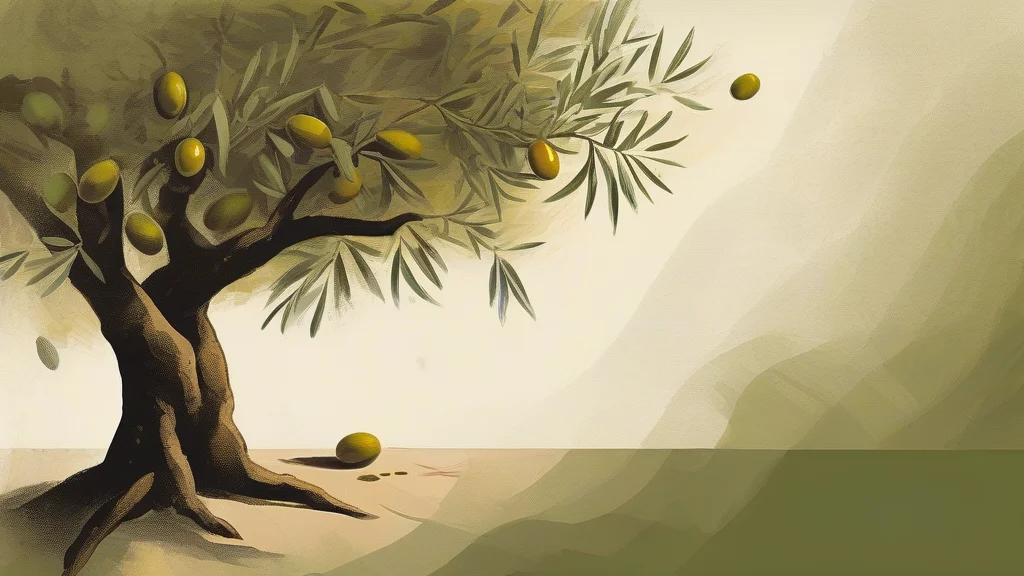
An olive is the fruit of the olive tree, a cultivated evergreen whose fruits are valued for their distinctive flavor and for the oil they yield. The word can also refer to the tree itself and to a muted yellowish-green or gray-green color. Olives are central to Mediterranean, Middle Eastern, and southern European food traditions, especially through olive oil, which is used in dressings, cooking, preservation, and religious practices. The association of the tree with peace is ancient and especially familiar from the phrase “olive branch,” an emblem of reconciliation. As an adjective, olive describes colors and objects associated with the fruit or tree, while as a noun it names both the tree and its fruit. The word is common in British and US English, although culinary and regional usages can differ.
The fruit of the olive tree, or the evergreen tree that produces it.
"They served bread, olives, and soft cheese before the meal."
The singular can refer to an individual fruit or, in contexts such as “the olive,” to the tree; the plural “olives” usually refers to the fruits or to the fruit as food.
Of the color olive, especially a yellowish-green or gray-green color; also, made from or resembling an olive tree or its fruit.
"She wore an olive-green coat that complemented the landscape."
The color sense is especially common in “olive green” and “olive drab.”
The plural refers to multiple fruits or to the fruit collectively, especially in culinary contexts.
"The dish was topped with green olives and strips of roasted peppers."
The olive branch has symbolized peace since antiquity, giving this ancient Mediterranean fruit a lasting association with reconciliation and hope.
Reviewed by Deb Chak, Editor. AI-assisted content curated by RJS Tech Solutions LLP.
Where does olive come from?
The English word “olive” entered through Old French “olive,” which came from Latin “oliva.” Latin “oliva” is the source of related forms in several European languages and gave rise to English words including “olivary,” “olivaceous,” and “olivine.” The deeper origin of the Latin word is uncertain, although the olive tree and its fruit were cultivated in the Mediterranean long before the medieval period.
Related word forms
How olive is actually used
In its color sense, “olive” is commonly used in “olive green” and “olive drab.” In symbolic expressions such as “offer an olive branch,” it refers to a gesture of peace or reconciliation.