
What does oratorio mean?
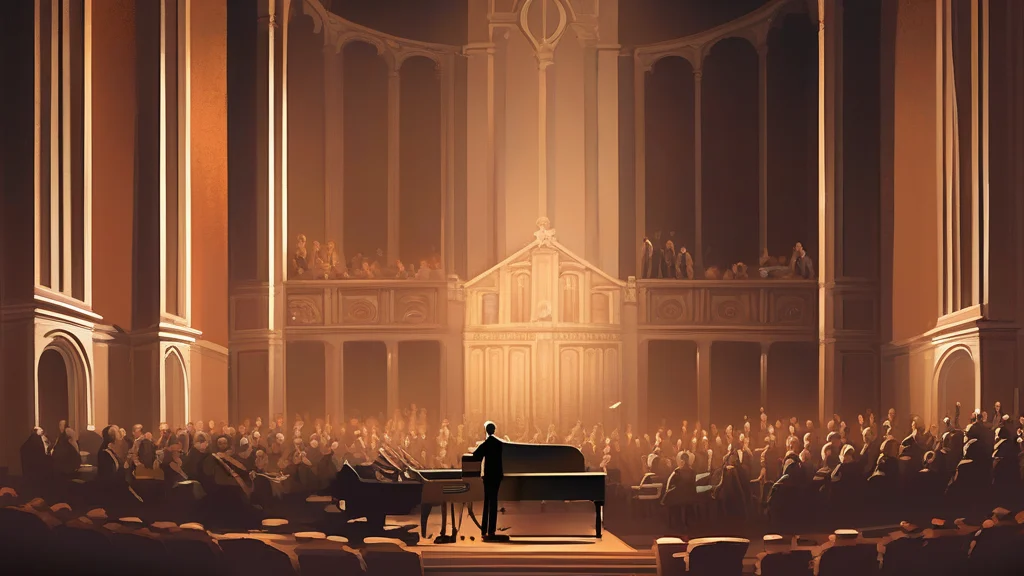
An oratorio is a large-scale musical composition written for soloists, chorus, and orchestra. Its subject is commonly religious or historical, but the genre can also draw on literary, dramatic, or civic themes. An oratorio generally combines orchestral music, choral singing, and spoken narration, with a sustained narrative that gives the work a dramatic shape. It differs from an opera chiefly in presentation: an oratorio is often performed in concert without scenery, costumes, or stage action, although modern productions may be fully staged. The form developed in Italy during the late seventeenth century, initially in small religious buildings called oratories, from which the name comes. Famous examples include Handel's Messiah, Saint-Saëns's The Carnival of the Animals, and Elgar's The Dream of Gerontius. The word is useful because it identifies a distinctive combination of sacred or narrative subject, symphonic scale, choral emphasis, and concert-style presentation.
nounA large-scale musical composition for soloists, chorus, and orchestra, usually based on a religious, historical, or dramatic narrative. It may be performed with or without scenery, costumes, or theatrical action.
- A large-scale musical work for soloists, chorus, and orchestra, typically with a religious, historical, or dramatic narrative and often incorporating spoken narration.
"The festival concluded with a stirring performance of the Christmas oratorio."
"They performed a new oratorio based on the story of the ancient city."
"The oratorio's final chorus brought the concert to an emotional close."
The regular English plural adds -s.
"Several major oratorios were scheduled for the festival."
The oratorio takes its name from the small Italian chapels where early examples were presented with music but no scenery or costumes.
Reviewed by Deb Chak, Editor. AI-assisted content curated by RJS Tech Solutions LLP.
Where does oratorio come from?
English borrowed the word from Italian oratorio, meaning “a place of prayer,” which derives from Latin oratorium. Both forms trace to Latin orare, “to pray.” The musical genre developed in seventeenth-century Italy in connection with small oratories, where sacred dramas could be performed without elaborate scenery or costumes.
How oratorio is actually used
In general use, “oratorio” refers to a large musical narrative work. It overlaps with “cantata,” but an oratorio is usually more extended, dramatic, and suitable for soloists, chorus, and full orchestra. The term is also used occasionally for a staged concert performance of such a work.
Easily confused with oratorio
An oratorio is a dramatic musical composition, whereas an oratory is a form of public speaking or, historically, a building used for prayer.