
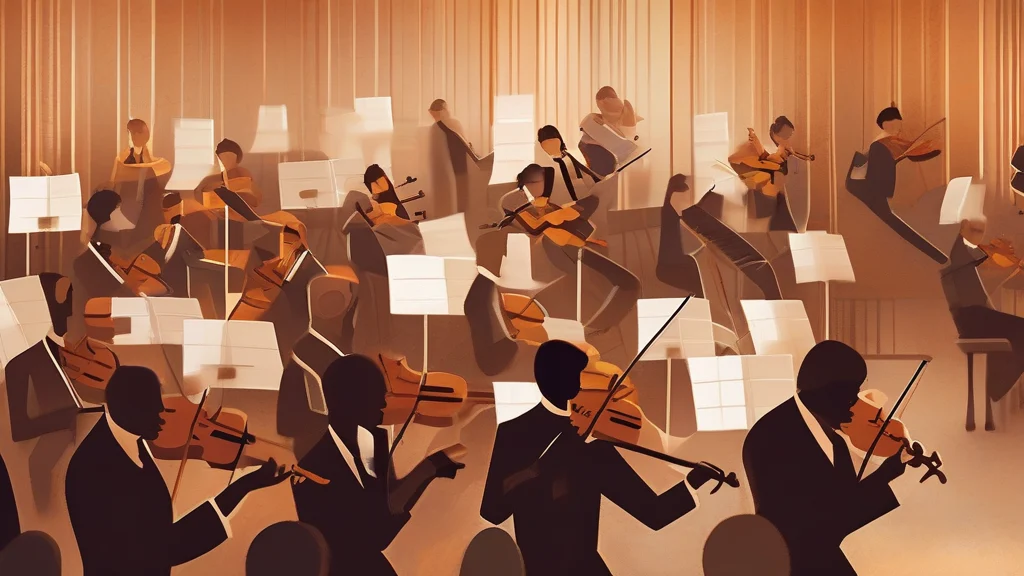
What does orchestrating mean?
Orchestrating means organizing and coordinating several parts so that they operate as an effective whole. It is especially used for complex undertakings involving multiple people, organizations, or stages, such as political campaigns, international negotiations, business transitions, and large-scale projects. The word may suggest not merely arranging individual tasks but directing them toward a common result, with each participant contributing a defined role. Orchestrating also has a musical sense: a composer orchestrates a composition when arranging or assigning its musical parts for an orchestra. In ordinary figurative use, the term can sound formal and may carry the connotation of careful or calculated control. It is often more apt than simply saying “organizing” when the elements involved are numerous, interdependent, or difficult to coordinate. The related noun “orchestration” refers both to the process of coordinating such parts and, in music, to the resulting arrangement for instrumental performers.
verbTo organize and coordinate the activities of several people or groups so that they work together effectively. It can also refer to arranging a musical composition for an orchestra.
- To organize, coordinate, or manage a complex activity or group of people.
- To arrange or adapt a musical composition for performance by an orchestra.
"The team worked overnight to orchestrate the relief effort."
"The executive orchestrated a coordinated response among several departments."
"The composer orchestrated the themes before presenting them to the players."
From the musicians' pit to the negotiating table, an orchestra's power comes from making separate parts work as one.
Reviewed by Deb Chak, Editor. AI-assisted content curated by RJS Tech Solutions LLP.
Where does orchestrating come from?
The English verb was formed in the 19th century from “orchestra,” with the suffix “-ate,” in its original musical sense of arranging music for orchestral performance. “Orchestra” comes through Latin from Greek orchēstra, referring originally to the stage or semicircular arrangement used by dancers in ancient Greek drama. During the 19th century, the verb developed broader figurative meanings involving the organization and coordination of complex or disparate activities.
Related word forms
How orchestrating is actually used
The figurative sense is common in formal and journalistic contexts. It often suggests deliberate management of multiple people, institutions, or stages, sometimes with an implication of careful control.
Easily confused with orchestrating
To coordinate is generally to align actions or people toward a shared outcome, whereas to orchestrate often implies directing a complex arrangement of participants or resources.
Orchestration is the process or result of organizing coordinated parts, while orchestrating is the verb describing that activity.