
What does ottoman mean?
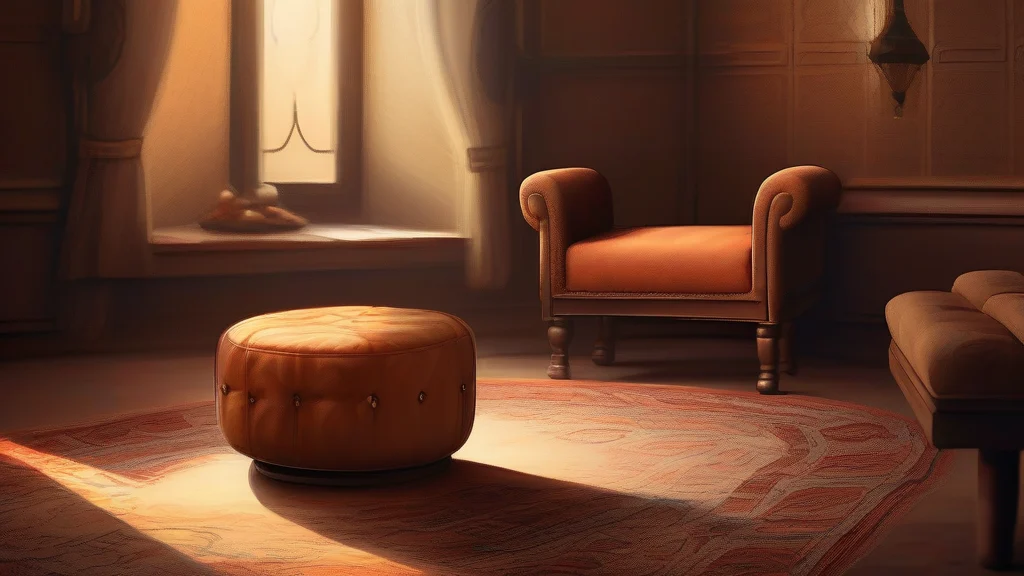
An ottoman is a low upholstered seat, usually without a back, that serves as a footrest, stool, or extra seat. The name reflects the influence of Ottoman decorative arts, particularly the richly patterned fabrics and upholstery associated with the Ottoman world. Lowercase ottoman is the ordinary modern noun for the piece of furniture. Capitalized Ottoman has a separate historical role: as a noun, it can denote a subject of the Ottoman Empire or a member of its ruling dynasty, and as an adjective, it describes the empire, its inhabitants, its government, and its culture. These uses are especially common in history, art history, and discussions of architecture, textiles, ceramics, and political history. Today, the furniture sense is by far the most familiar, but the capitalized form remains important because the Ottoman Empire profoundly influenced the histories and cultures of southeastern Europe, western Asia, and North Africa.
A low, upholstered or padded seat without a back, commonly used as a footrest or low stool.
"The ottoman in the middle of the room was covered in blue velvet."
Also used for a low seat that may be moved or combined with a chair.
A person belonging to the Ottoman Empire or its subject peoples, especially in historical contexts.
"Ottoman diplomats negotiated with European courts."
This historical sense is less common today than the furniture sense.
A member of the dynasty that ruled the Ottoman Empire.
"The Ottoman sultan commissioned extensive new building in the city."
Usually appears in historical writing and in the phrase Ottoman dynasty.
Relating to the Ottoman Empire, its people, or its historical institutions and culture.
"The museum specializes in Ottoman art and architecture."
Normally capitalized when referring to the historical empire or its associated culture.
Used for multiple pieces of furniture; the plural ottomans is also occasionally attested in historical senses but is uncommon.
"Two upholstered ottomans stood at either end of the bed."
The humble ottoman carries the name of an empire: the low upholstered seat takes its name from a style of furnishing associated with Ottoman textiles and decorative arts.
Reviewed by Deb Chak, Editor. AI-assisted content curated by RJS Tech Solutions LLP.
Where does ottoman come from?
The modern English word developed through the adjective Ottoman and the name Ottoman Empire, both ultimately associated with the Turkish form Osman for the empire's founder and dynasty. Ottoman Turkish was the empire's principal written language, although the empire was highly multilingual. The lowercase furniture word came through a similarly capitalized historical designation, reflecting the use of Ottoman-style textiles and upholstery in European furniture.
Related word forms
How ottoman is actually used
The lowercase noun is standard in British and American English. The capitalized adjective is chiefly historical, while the historical noun meaning a person of the empire is now unusual outside historical writing. The capital distinction is editorial rather than grammatical.
Easily confused with ottoman
Lowercase ottoman usually means a low upholstered seat, while capitalized Ottoman generally refers to the historic empire, its inhabitants, or something associated with them.