
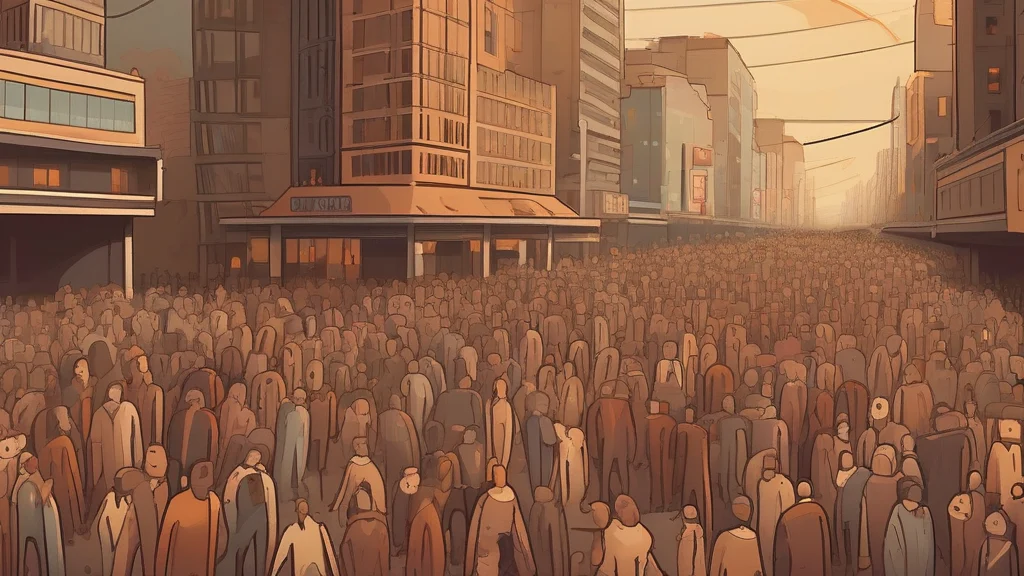
What does overpopulated mean?
Overpopulated describes a place or population that has grown beyond the capacity of its available space, resources, or services to support comfortably. The word is especially associated with cities, regions, habitats, and communities affected by rapid population growth or limited resources. It suggests not merely that many people are present, but that their number creates pressure on housing, employment, education, healthcare, infrastructure, or the environment. In public discussion, “overpopulated” can carry a policy or environmental implication, so it may be used when discussing migration, birth rates, planning, sustainability, or conservation. The related verb “overpopulate” describes causing an area to exceed such a limit, while “overpopulation” names the broader condition or process.
Having a population larger than the available space, resources, or services can reasonably support.
"An overpopulated region may face shortages of housing and public services."
Often used in demographic, environmental, and urban-planning contexts; it can imply that the population is unsustainable rather than simply unusually dense.
To cause a place, habitat, or population group to become excessively populated.
"The introduction of invasive species overpopulated the island and disrupted its ecosystem."
Less common than the adjective form and usually transitive.
A place can become overpopulated long before it feels physically packed, as its people compete for housing, jobs, water, schools, and healthcare.
Reviewed by Deb Chak, Editor. AI-assisted content curated by RJS Tech Solutions LLP.
Where does overpopulated come from?
The word is formed from the prefix over- and the verb populate, meaning to fill or furnish with people. Its sense developed from the idea of having an excessive population. The root populate comes through Latin populāre, from populus, meaning “people” or “a populace,” which is also the source of related English words such as population and popular.
Related word forms
How overpopulated is actually used
The term is commonly used in environmental, demographic, urban-planning, and public-health contexts. It is generally more formal than saying that a place is too crowded, and it can imply concern about the long-term sustainability of resources rather than merely momentary congestion.
Easily confused with overpopulated
Both words describe excessive population, but overpopulated focuses on the population density in relation to available space or resources, whereas overcrowded more directly emphasizes the condition of being too crowded.