
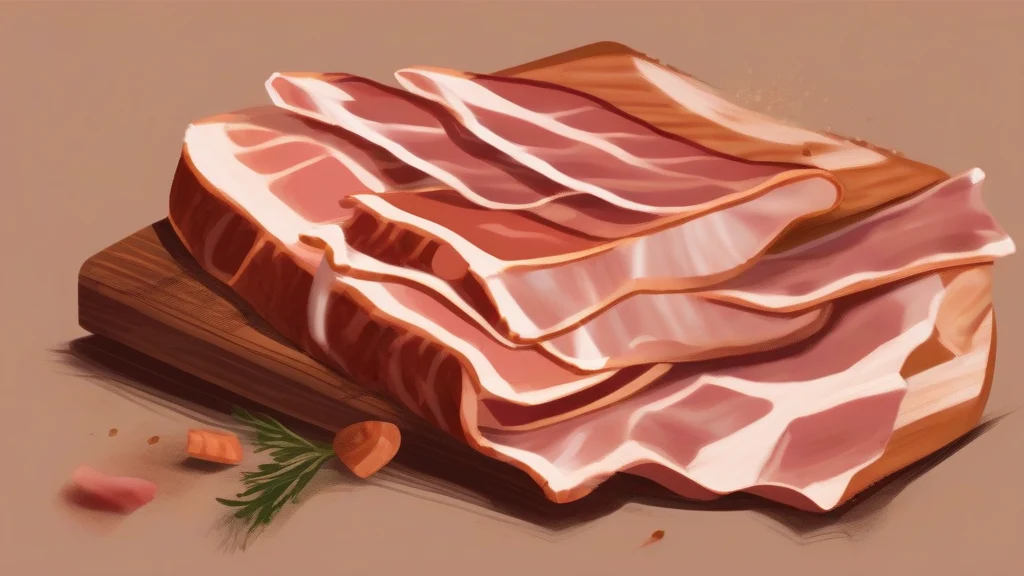
What does pancetta mean?
Pancetta is cured, salted pork belly that is usually rolled into a compact cylinder and then cut into thin slices. It belongs to the broad family of cured pork products but is distinguished by its specific cut and Italian culinary tradition. Because it combines tender seasoned meat with fat, pancetta can provide richness to pasta, soups, salads, and meat dishes, and its crisp edges are often used for texture as well as flavour. The name comes from Italian, where it literally means “little bread,” although the food itself is pork. English speakers most often encounter the word in recipes, especially in dishes associated with Italian cuisine. Pancetta should not be confused with ordinary bacon, which is a broader category, or with guanciale and prosciutto, which are made from different cuts of pork. Although plural forms such as “pancettas” are possible, the word is commonly treated as an uncountable ingredient.
nounCured, salted pork belly, usually rolled and cut into thin slices for use in Italian and Mediterranean cooking. It is valued for its rich meat and fat and may be served raw, crisped, or added to pasta, salads, and other dishes.
- Cured pork belly, usually rolled and thinly sliced, used especially in Italian and Mediterranean cooking.
"He crisped finely sliced pancetta in the pan before adding it to the carbonara."
"She added crisp pancetta and freshly grated parmesan to the spaghetti."
"The chef wrapped the chicken breast in pancetta before roasting it."
Rarely used; pancetta is normally treated as an uncountable mass noun, with “slices of pancetta” preferred when referring to portions.
"Two slices of pancetta were crisped in a small frying pan."
Its Italian name literally means “little bread,” even though pancetta is one of the world's most savoury meats.
Reviewed by Deb Chak, Editor. AI-assisted content curated by RJS Tech Solutions LLP.
Where does pancetta come from?
Italian pancetta is the diminutive of panetto, “little bread,” which is itself formed from pane, “bread,” from Latin panis. The culinary meat sense developed through Italian usage, and the word was established in English culinary contexts by the early twentieth century. English cognates such as pan and pantry ultimately share the same Latin root through related Romance and Germanic developments.
How pancetta is actually used
Pancetta is a culinary loanword used particularly in recipes and discussions of Italian food. In English it is normally treated as an uncountable mass noun, so “slices of pancetta” is more usual than “pancettas.” “Italian bacon” is a familiar plain-language description, though it does not convey every culinary distinction.
Easily confused with pancetta
Bacon is a broad category of salted or cured pork, whereas pancetta specifically refers to Italian-style cured pork belly, usually rolled before being sliced.
Pancetta is made from pork belly, while guanciale is made from cured pork cheek and has a somewhat different texture and flavour.
Pancetta is cured pork belly, whereas prosciutto is dry-cured pork ham made from a leg or similar cut.