
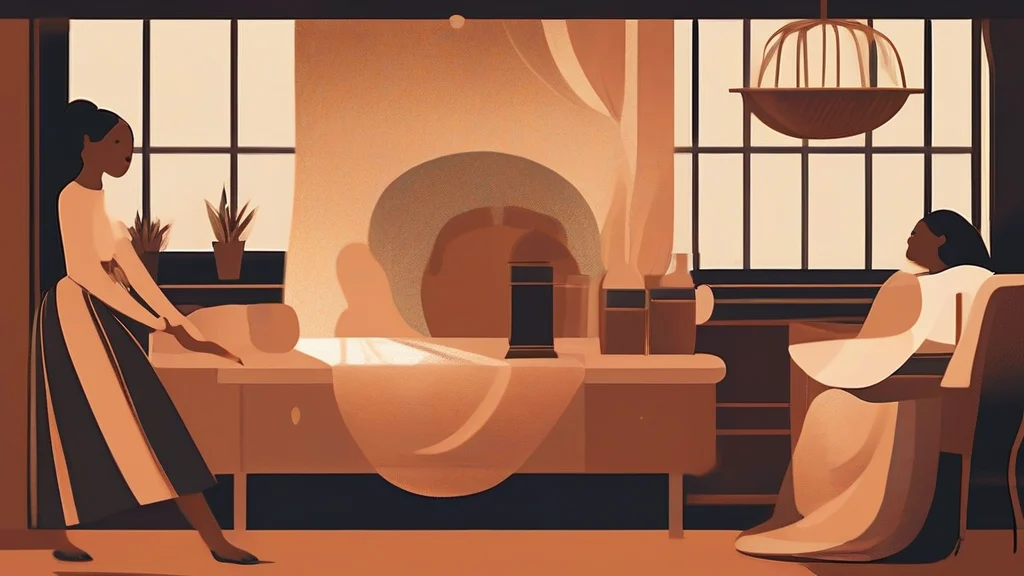
What does parlourmaid mean?
A parlourmaid was a domestic servant assigned to wait on guests and visitors in a household’s drawing room, the formal reception room of a home. The role included answering the door, bringing refreshments, arranging seating, and helping maintain the appearance and order of the room. In some establishments, especially hotels, the term also referred to an attendant with similar reception duties. The word is now chiefly historical, but it offers a vivid record of domestic service and the social customs of the period in which formal entertaining depended on dedicated household staff. Its association is not entirely negative: parlourmaids could be skilled professionals, although their work was generally undervalued and firmly bounded by class and gender expectations. The expression remains useful in historical fiction, heritage settings, and discussions of period household service.
nounA domestic servant who waited on guests in a household’s drawing room and performed related household duties. The term is chiefly historical and is also associated with attendants in certain hotels or other establishments.
- A domestic servant who waited on guests in a household drawing room, especially in the 19th and early 20th centuries.
- A hotel or establishment attendant whose duties involved receiving or serving guests in a parlour or reception area.
"The parlourmaid quietly informed the guests that dinner would be served in the drawing room."
"The parlourmaid brought fresh tea and told the visitor that the family would be downstairs shortly."
"In the hotel’s advertisements, the parlourmaid was responsible for receiving guests and arranging the lounge."
The regular plural adds “-s”; the plural is uncommon today because the term is chiefly historical.
"The old household employed two parlourmaids who waited on guests during formal evenings."
A parlourmaid was once the visible face of household service: a single word preserves the social world of the Victorian drawing room.
Reviewed by Deb Chak, Editor. AI-assisted content curated by RJS Tech Solutions LLP.
Etymology of parlourmaid
The word is a compound of “parlour,” meaning a room used for conversation or receiving visitors, and “maid,” a female domestic servant. “Parlour” developed through British usage, while the American spelling “parlor” reflects the influence of French and related continental forms. The compound became established in the 19th century, when a drawing-room servant was a recognizable domestic-service role. The spelling with “u” in “parlourmaid” is particularly associated with British English, whereas older American usage often wrote the expression as “parlor maid.”
Related word forms
How parlourmaid is actually used
The word is now chiefly historical and literary. In American usage, the two-word form “parlor maid” is more familiar; the compound is associated especially with British English and with 19th-century domestic service.
Easily confused with parlourmaid
A maid is a general domestic servant, whereas a parlourmaid specifically attended guests in a drawing room or similar reception area.
A chambermaid attends to private rooms, especially in a hotel, while a parlourmaid traditionally served in a drawing room or reception setting.