
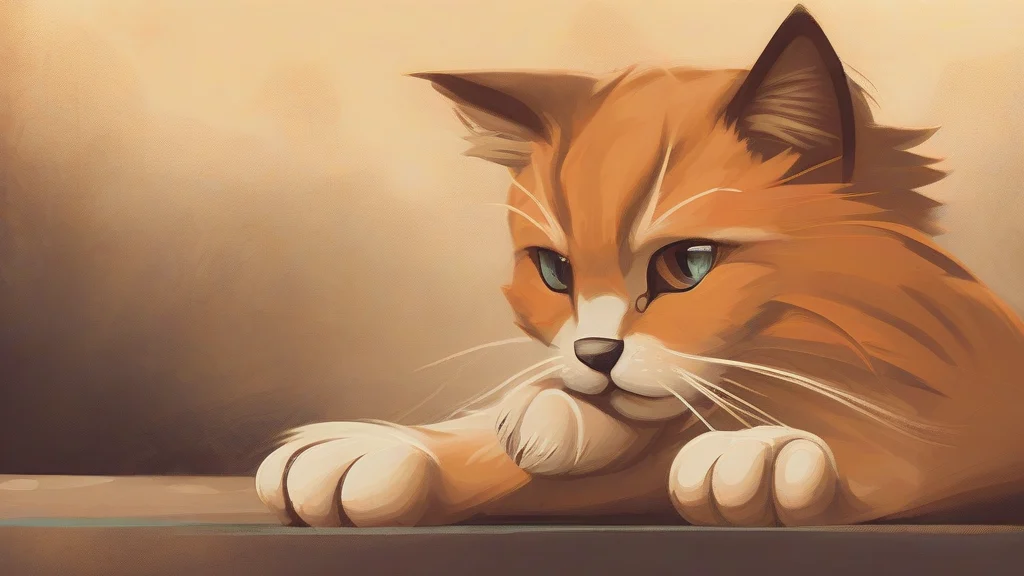
What does paw mean?
A paw is the foot or foot-like limb of an animal, particularly a mammal such as a dog, cat, bear, or fox. The word can also refer informally to a person's hand, as in expressions that are affectionate, humorous, or contemptuous. As a verb, paw means to touch, scratch, search, or handle something repeatedly with a paw or hand. It often suggests an awkward or persistent movement: an animal paws at a door, while a person paws through a pile of documents or tries to open a stubborn package. “A cat's paw” is also a familiar expression, and the word appears in idioms such as “paw the ground.” In general use, paw is concrete and familiar rather than technical, but its figurative uses can convey helplessness, clumsiness, greed, or intrusive curiosity.
The foot or foot-like limb of an animal, especially one with claws or toes.
"The fox placed one paw carefully on the frozen ground."
In informal contexts, paw can refer to a person's hand, often with an affectionate or dismissive tone.
To touch, scratch, feel, or search at something repeatedly with a paw or hand, often clumsily or persistently.
"The dog pawed at the closed gate until it opened."
The verb commonly implies clumsy, searching, greedy, or persistent movement and is sometimes derogatory when applied to people.
The standard plural of the noun is paws, as in “the animal stretched out its paws.”
"The cat left tiny paw prints across the dusty windowsill."
A paw can mean an animal’s foot, a human hand in an affectionate or dismissive phrase, or the sound and motion of someone searching clumsily through papers.
Reviewed by Deb Chak, Editor. AI-assisted content curated by RJS Tech Solutions LLP.
Where does paw come from?
The word comes through Middle English from Old English pawa, meaning an animal's foot or paw. Old English pawa belonged to the Germanic branch of the Indo-European language family and is related to forms such as Dutch poot and German Pfote. The modern English word developed from that inherited Germanic term, with its meanings extending over time from an animal's limb to human-hand metaphors and to the action of pawing or feeling with the hand.
Related word forms
How paw is actually used
The noun is standard in both British and American English. As a term for a human hand, it is usually informal and may sound affectionate, comic, or dismissive. The verb often suggests clumsy, persistent, or intrusive handling and can be derogatory when used about a person's behavior.