
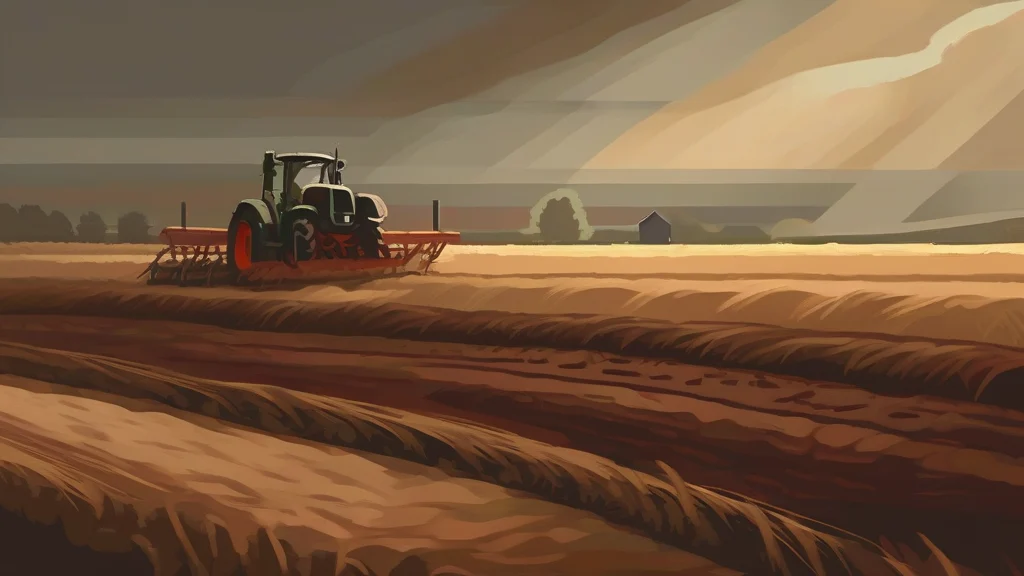
What does ploughland mean?
Ploughland means land that is ploughed, especially land regularly worked for crops. The word is an old-fashioned compound whose meaning is transparent: plough identifies the farming operation, and land identifies the terrain being cultivated. It can refer generally to cultivated country, but it may also evoke older descriptions of rural landscapes in which ploughland was contrasted with pasture, woodland, or waste. In modern English, “arable land” is much more common, and ploughland is chiefly encountered in literary, historical, or regional contexts. Because it carries a slightly rural and traditional tone, it is useful when the emphasis is not merely on soil suitable for crops but on the act and practice of cultivation. The expression also reflects the traditional British spelling, although “arable land” is the standard modern alternative in both varieties of English.
nounLand that is ploughed for cultivation, especially land regularly worked for crops.
- Land that is ploughed for cultivation, especially land regularly worked for crops.
"The village boundary separated the ploughland from the surrounding woodland."
"After the drainage project was completed, more of the ploughland could be planted each spring."
"The medieval records distinguish between ploughland, pasture, and woodland held by the manor."
The plural is uncommon because the word itself is uncommon in contemporary English.
"The survey identified several ploughlands suitable for cultivation."
Ploughland is arable country with the farmer's tool built right into its name.
Reviewed by Deb Chak, Editor. AI-assisted content curated by RJS Tech Solutions LLP.
Where does ploughland come from?
The word combines the English word plough, from Old English plōh, with land, from Old English land. The compound refers literally to ground brought under cultivation by ploughing. Its individual elements have long belonged to the vocabulary of agriculture, while the compound now has an uncommon, largely historical character.
How ploughland is actually used
Now chiefly literary, historical, or regional. In ordinary modern English, “arable land” or “farmland” is usually preferred.