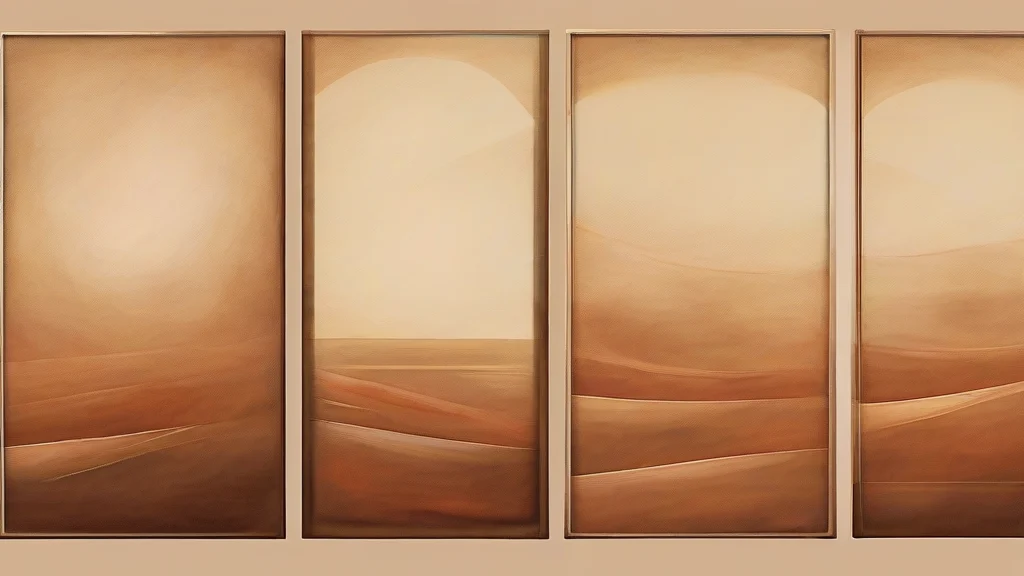
What does polyptych mean?
A polyptych is a work of art consisting of multiple panels or sections, often hinged together to be displayed as a single unit. This term is commonly used in the context of medieval art and architecture. The use of polyptychs allowed artists to create complex narratives and compositions that could be easily displayed and rearranged. In the 14th century, polyptychs were a common feature of medieval art, and many notable artists created works in this style. Today, polyptychs are highly valued for their historical and artistic significance, and many are on display in museums and galleries around the world. The study of polyptychs provides valuable insights into the artistic and cultural practices of the medieval period.
nounA polyptych is a work of art consisting of multiple panels or sections, often hinged together to be displayed as a single unit. This term is commonly used in the context of medieval art and architecture.
- A work of art consisting of multiple panels or sections
"The museum's collection includes a 14th-century polyptych by a renowned artist."
"The artist's use of a polyptych allowed for a complex narrative to unfold across multiple panels."
"In the 14th century, polyptychs were a common feature of medieval art."
The plural form polyptychs is used to describe multiple works of art consisting of multiple panels or sections.
"The museum's collection includes several polyptychs by different artists."
Reviewed by Deb Chak, Editor. AI-assisted content curated by RJS Tech Solutions LLP.
Etymology of polyptych
The term polyptych originates from the Greek words poly- (many) and ptyschos (folded). It was first used in the 14th century to describe works of art consisting of multiple panels or sections. Over time, the term has been adopted by art historians and scholars to describe a wide range of works from the medieval period.
How polyptych is actually used
Polyptych is often used in academic and art historical contexts to describe works from the medieval period.