
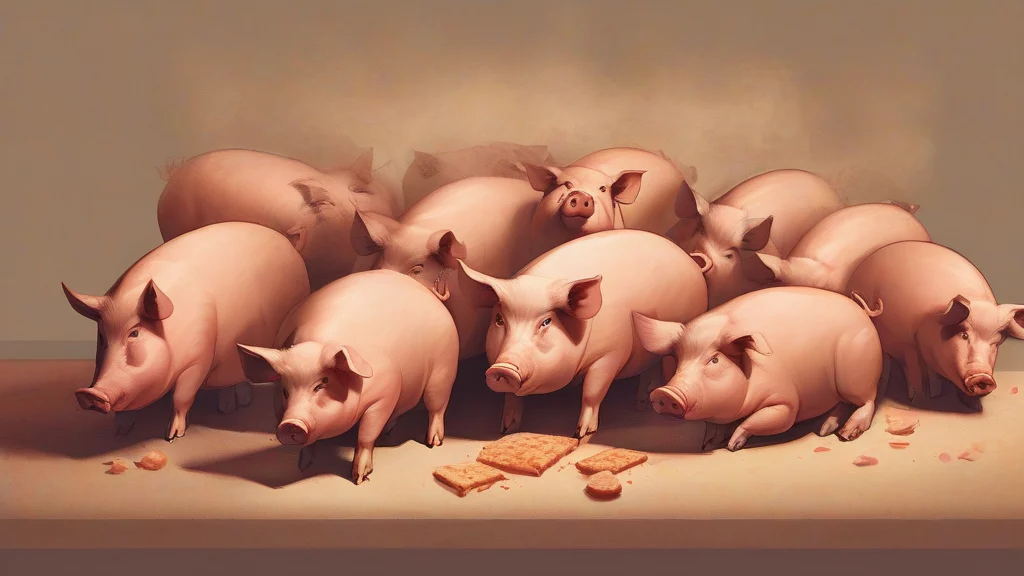
What does porkiness mean?
Porkiness names the condition of being excessively fat or resembling pork. Its figurative use is more pointed: it describes someone whose comfort, self-indulgence, or smugness is portrayed as coarse and complacent. The word is generally heard in satire, criticism, and humorous description, often when a writer wishes to portray a person as pampered or morally complacent. It can refer to either physical appearance or conduct, but the figurative sense is especially characteristic of political and social satire. Because it carries a derogatory and potentially insulting tone, it is more common in contexts where the target is being mocked than in neutral description. The word is comparatively uncommon in formal writing, though it remains vivid and memorable in editorial and comic contexts.
The state of being excessively fat or resembling pork.
"The actor's recent weight gain was the subject of cruel jokes about his porkiness."
A disparaging term that may be considered rude or insulting when applied directly to a person.
Smug, self-indulgent, or unctuous behavior portrayed as gluttonous and complacent.
"The pamphlet attacked the committee's comfortable porkiness without acknowledging those it had excluded."
Figurative and strongly critical, especially in political satire and moral commentary.
Plural forms are possible but rare; the word is normally used as an uncountable noun naming a quality.
"The cartoonist made a series of separate porkinesses out of politicians' private appetites."
Porkiness began as a description of physical fatness but became a sharper criticism of the self-satisfied comfort that sometimes accompanies privilege.
Reviewed by Deb Chak, Editor. AI-assisted content curated by RJS Tech Solutions LLP.
Etymology of porkiness
Porkiness was formed from the established English noun pork with the suffix -iness, a productive ending that forms nouns denoting a quality or condition. Pork ultimately comes through Old French porc from Latin porcus, the word for a pig. The same Latin root also underlies English words including porcupine and the adjective porcine.
How porkiness is actually used
Usually critical or humorous rather than neutral. The figurative sense can be harsh and may carry implications of gluttony, complacency, or a coarse disregard for refinement.