
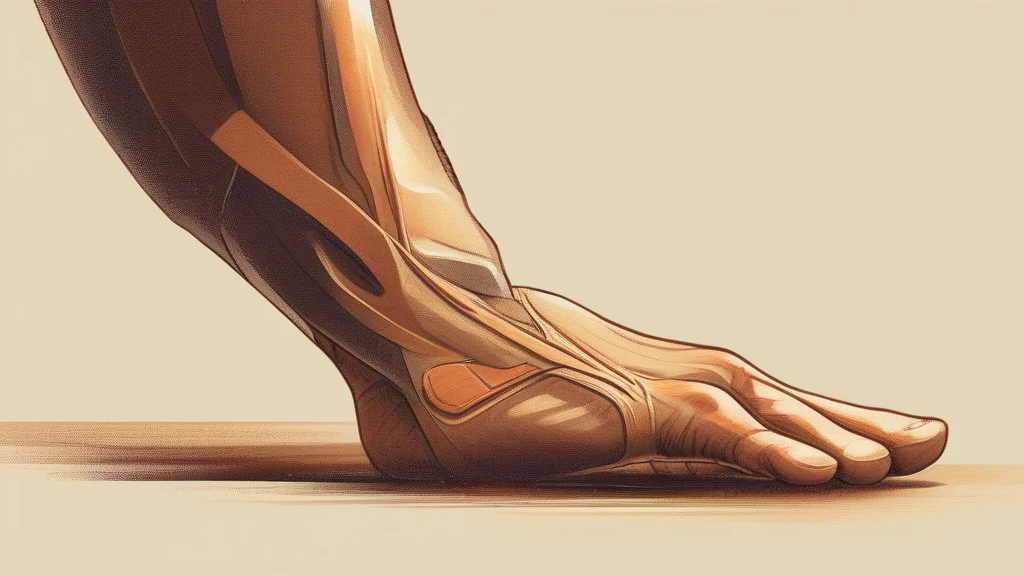
What does pronation mean?
Pronation is the anatomical movement or position that turns the palm downward, or rotates the forearm so that the hand faces the ground. It is the opposite of supination, which turns the palm upward. The term is used in medicine, physical therapy, biomechanics, dance, and sports science, particularly in discussions of forearm movement, foot alignment, and posture. Excessive pronation of the foot, for example, describes a pattern in which the foot rolls inward more than expected and may contribute to problems involving the ankle, knee, or lower back. Pronation can also refer more generally to turning the sole of the foot inward, as in certain dance or martial-arts positions. Although the word is technical, it is useful for describing a specific and important form of rotation that is often discussed in relation to injury prevention, rehabilitation, and efficient movement.
nounPronation is the anatomical position or movement in which the palm faces downward or the forearm rotates so that the hand turns toward the ground. In anatomical terminology, it also refers to the act of turning into this position.
- The rotation of the forearm so that the palm faces downward or toward the ground.
- The anatomical position in which the palm faces downward, especially of the foot or hand.
"The therapist explained that excessive pronation of the foot can contribute to flat feet and ankle pain."
"She performed a controlled pronation of the forearm while holding the weight in her hand."
"The scan showed excessive pronation of the foot during walking."
Usually used in technical or analytical contexts, especially when describing different degrees or patterns of inward or downward rotation.
"The study compared the degree of pronation in athletes with and without ankle instability."
When you turn your palm downward, you are performing the movement anatomists call pronation — the opposite of supination.
Reviewed by Deb Chak, Editor. AI-assisted content curated by RJS Tech Solutions LLP.
Where does pronation come from?
The word comes through French from Latin prōnātiōn, a noun associated with prōnāre, meaning to bend or incline forward. Its deeper root is the Latin prōnus, meaning bent forward or leaning forward, which is also the source of prone and the verb pronate. In modern English, the word's meaning specialized to the downward rotation of the forearm and related anatomical movements.
Related word forms
How pronation is actually used
Pronation is a technical term used mainly in anatomy, medicine, physical therapy, sports science, and dance. In general anatomical use, it describes the downward or inward rotation of a body part, especially the forearm or foot.
Easily confused with pronation
Pronation turns the palm downward, whereas supination turns it upward, often bringing the thumb to the front of the body.