What does pullulation mean?
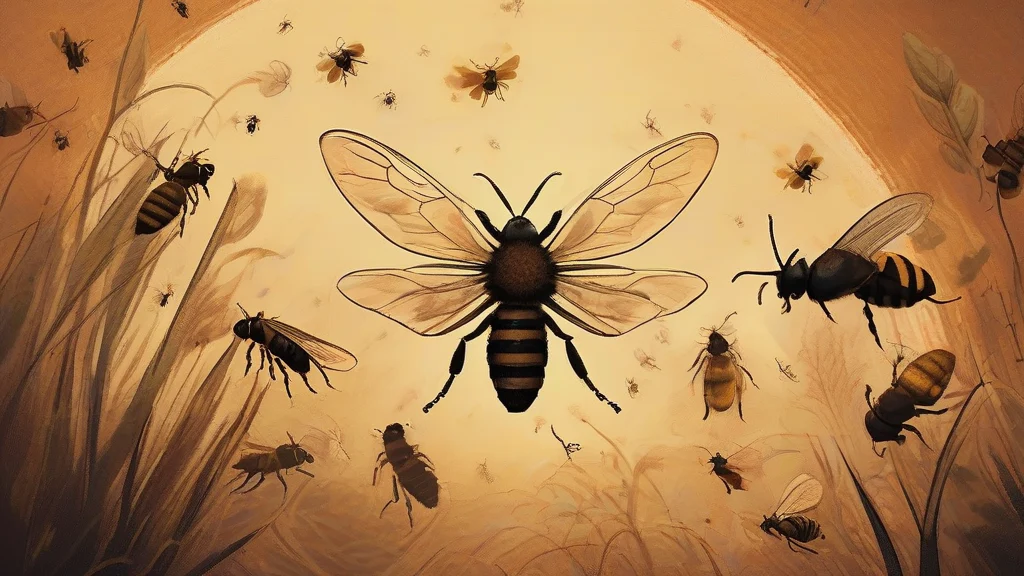
Pullulation refers to a large number of insects gathered together in a place, often in a state of excitement or agitation. This term is often used to describe the sudden and intense gathering of bees, wasps, or flies, and is associated with a sense of excitement or agitation. The word has its roots in Latin, where it is derived from the verb pullulare, meaning to cause to swarm. Pullulation is often used in formal or technical contexts, such as in biology or entomology, to describe the behavior of insects. However, it can also be used in more general contexts to describe any large gathering of people or animals. The word has a somewhat formal or technical tone, and is not commonly used in everyday conversation.
nounA large number of insects, especially bees, wasps, or flies, gathered together in a place, often in a state of excitement or agitation.
- A large number of insects gathered together
"The swarm of locusts was a terrifying sight, with their pullulation causing widespread destruction to crops."
"The bees' pullulation around the hive was a sign of their health and productivity."
"The wasps' pullulation in the park was a nuisance to picnickers."
The plural form of pullulation is used to describe multiple instances of the phenomenon, and is often used in formal or technical contexts.
"The multiple pullulations of bees in the hive were a sign of their health and productivity."
Reviewed by Deb Chak, Editor. AI-assisted content curated by RJS Tech Solutions LLP.
Etymology of pullulation
The word pullulation is derived from the Latin verb pullulare, meaning to cause to swarm. This verb is itself derived from the Latin noun pullus, meaning a young insect. The word has been used in English since the 17th century, and has its roots in the study of entomology.
How pullulation is actually used
Pullulation is often used to describe a sudden and intense gathering of insects, and is often associated with a sense of excitement or agitation.