
What does rook mean?
A rook is most commonly known as a European member of the crow family, similar to a carrion crow and recognizable by its dark plumage, pale legs, and noisy calls. In chess, a rook is one of the major pieces, valued for its ability to move along ranks and files; in an informal opening, the two towers on the board are called the rooks. A third, less common sense describes a person who cheats or swindles, particularly someone who deceives another in a business or financial transaction. The word therefore links a familiar bird, a central chess piece, and a sharply negative social judgment. Its different meanings are distinguished mainly by context rather than pronunciation, which remains /ruːk/ in all of them.
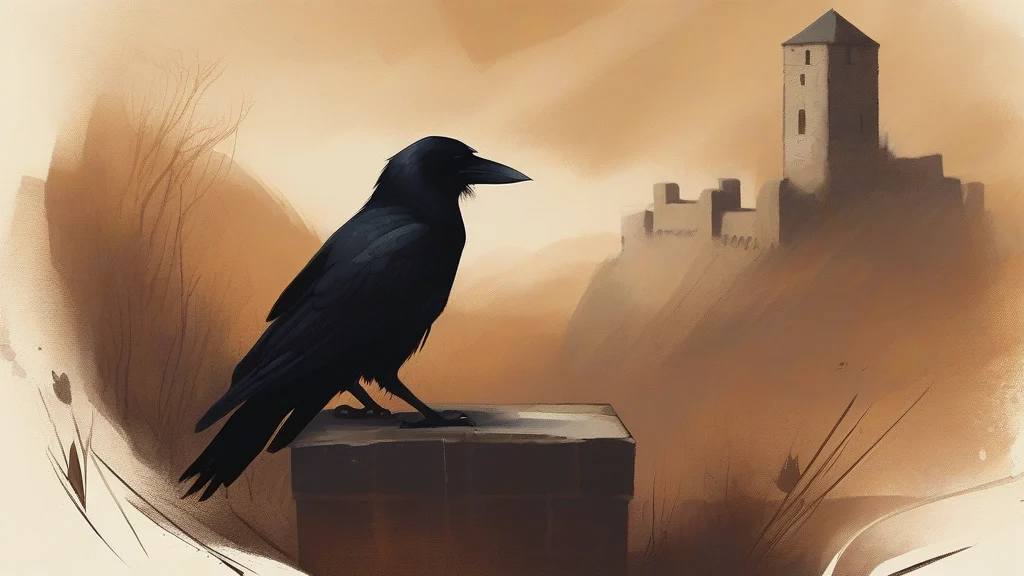
A European bird of the crow family, especially the common rook, with glossy dark plumage and a pale bill.
"Rooks gathered on the roof of the old mill."
The bird sense is common in British and US English; in Britain, rooks are also associated with the noisy rookeries where they traditionally nested.
A chess piece that moves any number of squares in a straight line horizontally or vertically and captures by moving onto an opposing piece.
"She sacrificed the rook to open a file for her queen."
In chess, the two rooks are often called the rooks or the castling rooks.
A person who cheats or swindles, especially in a business or financial transaction.
"The dealer was accused of being a rook who had concealed the car's history."
This sense is chiefly informal and is especially associated with British English.
To cheat or swindle someone, especially in a business or financial transaction.
"The dealer tried to rook the customer over the price of the car."
Chiefly British informal usage.
The plural is regular and applies to the bird, the chess piece, and the person meaning a swindler.
"The rooks circled above the field while the chess players studied the board."
A rook is both a noisy crow relative and the chess piece that can sweep an entire rank or file.
Reviewed by Deb Chak, Editor. AI-assisted content curated by RJS Tech Solutions LLP.
Where does rook come from?
The word comes from Old English rōc, used for the bird and recorded in related forms in Old High German and Middle Dutch. The chess-piece sense developed from the traditional visual resemblance between the piece and the bird, whose prominent beak could suggest the shape of a rook. The informal verb meaning to cheat or swindle developed in the 19th century, probably by association with the bird's noisy or mischievous character.
Related word forms
How rook is actually used
The bird and chess senses are common in British and US English. The sense meaning a swindler or cheat is especially associated with British informal usage and sounds more dismissive than the neutral terms “fraudster” or “cheat.”
Easily confused with rook
A rook is a crow-family bird or a chess piece, whereas a rake is a garden tool or, informally, a fashionable man.
A rook as a person is a swindler or cheat, while the same word as a bird refers to a member of the crow family.