
What does roughhewn mean?
Roughhewn describes something that has been made or shaped in a visibly rough, unfinished way, especially wood, stone, or the face of a person. The word evokes a surface that retains the marks of the tools used to create it, such as axe or chisel marks in timber. It can also describe a person, artistic style, or performance that is rugged, authentic, or unpolished, often implying that roughness is part of its character rather than a defect. In contrast to the smooth and carefully finished quality associated with polished, a roughhewn object suggests directness, simplicity, and the visible evidence of its making. The adjective is especially useful when describing physical surfaces, but its figurative uses can convey natural energy or an intentionally unrefined style.
adjectiveRough and unfinished, especially when describing wood, stone, or the surface of something. Figuratively, it describes a person, style, or performance that is rugged, unpolished, or lacking refinement.
- Describing material, especially wood or stone, that has been cut or shaped without being smoothed or polished.
- Describing a person, face, style, or performance that is rugged, unrefined, or deliberately unpolished.
"The cabin was built from rough-hewn logs that still showed the marks of the axe."
"The sculptor left the statue's rough-hewn surface visible."
"His rough-hewn presentation style made the speech feel more authentic than polished."
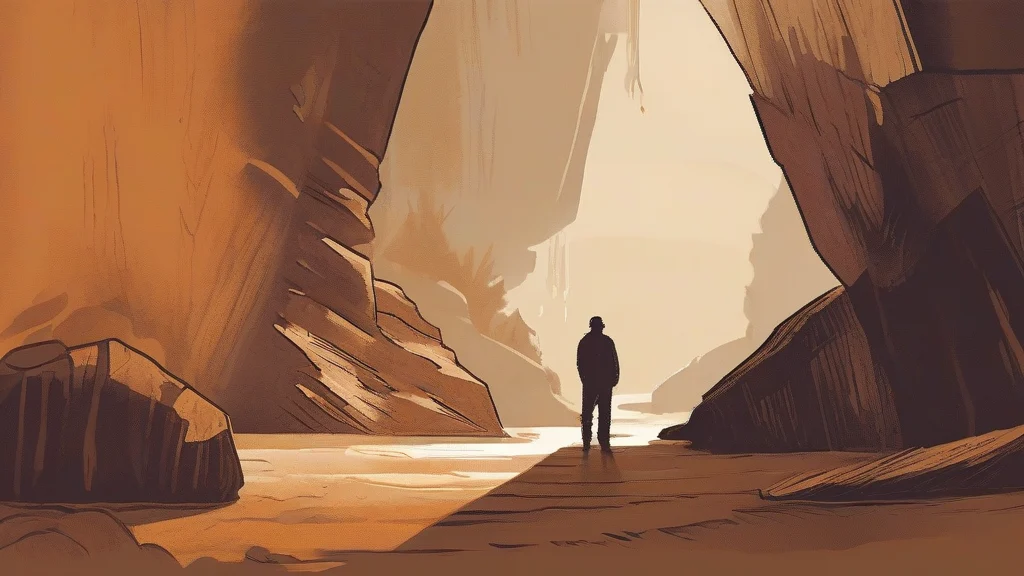
A rough-hewn surface keeps the marks of the tools that shaped it, making roughness a record of craftsmanship rather than a flaw.
Reviewed by Deb Chak, Editor. AI-assisted content curated by RJS Tech Solutions LLP.
Where does roughhewn come from?
The word combines 'rough' with the past participle 'hewn,' from the verb 'hew,' meaning to cut or shape, especially wood or stone. 'Rough' developed through Middle English from forms related to Old English rūh, meaning coarse or uneven, while 'hew' continues Old English heowan. The combination originally conveyed the idea of material that had been cut or shaped but not smoothed. In modern figurative use, it extends that physical sense to people and artistic expression that are rugged or unpolished.
How roughhewn is actually used
Usually hyphenated before a noun, as in 'rough-hewn wood.' It can be used figuratively for people, language, and artistic styles, where it often suggests naturalness, toughness, or a lack of refinement. The word is more common in descriptive and literary contexts than in everyday speech.