
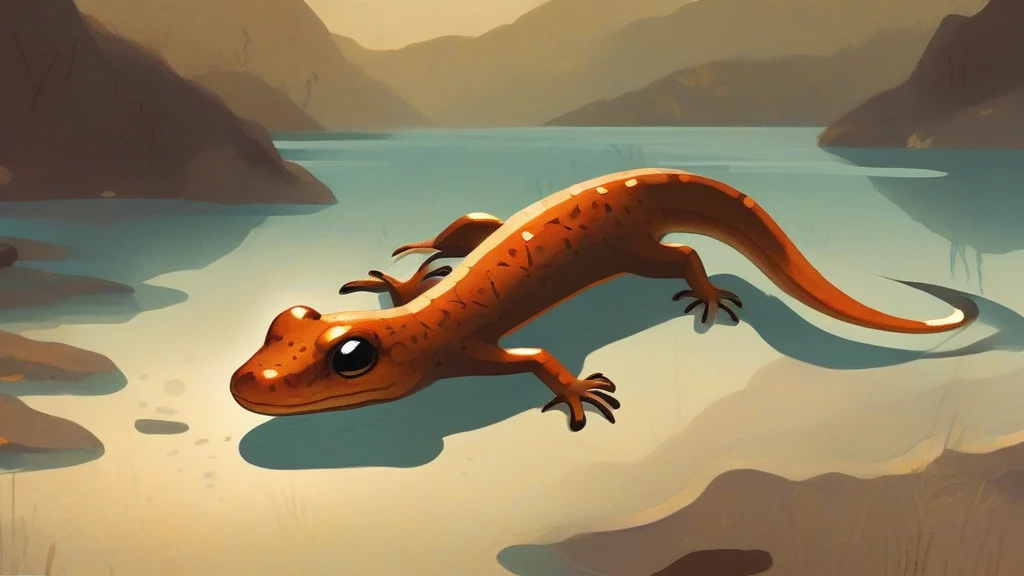
What does salamander mean?
A salamander is a moist-skinned, long-tailed amphibian, related to frogs and toads but generally distinguished by its elongated body and tail. Many species spend part of their lives in water as larvae and later live on land, although some remain aquatic throughout their lives. In British and American English, “newt” is also used for certain salamanders, especially smaller species, while the broader term “amphibian” refers to a much larger group that includes frogs, toads, and salamanders. The word has a second, famous meaning in folklore: a salamander was believed to live in fire and to be immune to heat. This imaginative association makes the word especially memorable and explains its appearance in literature, heraldry, and symbolic language.
A long-tailed amphibian with moist skin, four legs, and often a life that includes both aquatic and terrestrial stages.
"The conservationists studied the salamander population in the forest."
“Newt” is commonly used for some smaller salamanders, especially in everyday speech. “Salamander” is also the preferred broad term for the group.
A legendary fire-dwelling creature said to be unharmed by flames.
"Artists depicted the salamander as a symbol of elemental fire."
This sense belongs mainly to folklore, literature, heraldry, and figurative language.
The standard plural is formed by adding -s.
"Several salamanders were hiding beneath the fallen leaves."
A salamander can breathe through its moist skin, while the mythical salamander was said to survive in fire—an extraordinary inversion of nature.
Reviewed by Deb Chak, Editor. AI-assisted content curated by RJS Tech Solutions LLP.
Where does salamander come from?
The English word comes through Old French salamandre from Latin salamandra, which was borrowed from Greek salamandra. The ultimate origin of the Greek word is uncertain, so no deeper etymology should be assumed. The modern English form developed through medieval French and has close cognates in several European languages, including German Salamander.
Related word forms
How salamander is actually used
In general English, “salamander” refers to salamanders collectively, while “newt” is commonly used for smaller members of the group. In British usage, “newt” may also be used more broadly for small aquatic amphibians. The mythological sense is literary, historical, or figurative rather than everyday.