
What does schist mean?
Schist is a metamorphic rock created when heat, pressure, and fluids alter another rock over geological time. Its defining feature is foliation: a layered or banded arrangement of mineral grains that may sparkle because of abundant mica. Schist commonly contains quartz, feldspar, and mica and can occur in many colors, including silver-gray, green, brown, and pink. Its texture reflects the directional pressure involved in mountain-building and other tectonic processes, making schist useful to geologists for understanding a region’s geological history. The word also refers to a group of related rock types, including mica schist and schistose rocks. In landscapes and construction, schist is valued for its rugged appearance and distinctive crystalline structure.
nounSchist is a foliated metamorphic rock formed when existing rock is subjected to heat and pressure, giving it a layered or banded texture. It commonly contains minerals such as mica, quartz, and feldspar.
- A foliated metamorphic rock with a characteristic layered or banded structure, often containing visible mica crystals.
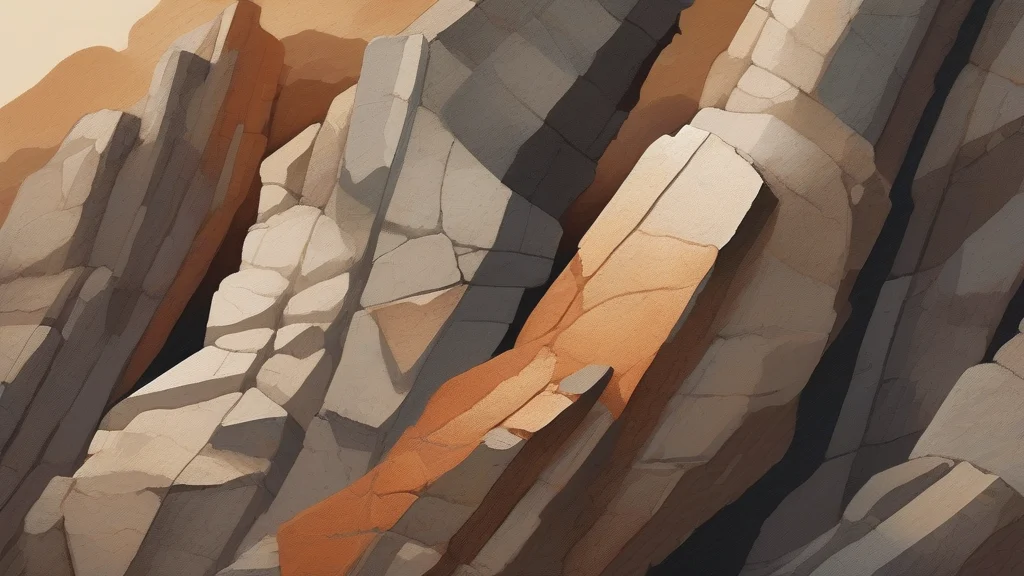
"The cliff exposes layers of schist that sparkle with mica."
"The hikers followed a narrow path through steep, rugged schist."
"Geologists found veins of quartz running through the exposed schist."
The plural is uncommon in general writing but is standard in geological descriptions when referring to distinct rock bodies or specimens.
"The collection includes several schists from the mountain range."
Schist records the pressure of ancient collisions in its layered, glittering surfaces.
Reviewed by Deb Chak, Editor. AI-assisted content curated by RJS Tech Solutions LLP.
Where does schist come from?
Schist comes through English from Greek schistos, meaning “split” or “cleft,” referring to the rock’s tendency to split along distinct layers. The Greek adjective derives from schizein, “to split,” the same root associated with schism and schizoid. In English usage, the geological word developed during the early 19th century as mineralogy and geology became established scientific disciplines.
Related word forms
How schist is actually used
In geology, schist is used specifically for a medium- to coarse-grained metamorphic rock whose grains are visibly aligned. It is less commonly used in general conversation, though the name often appears in descriptions of mountainous landscapes and building stone.
Easily confused with schist
Schist is a metamorphic rock with a foliated texture, whereas shale is a sedimentary rock formed from compacted clay and silt.
Schist forms through the metamorphism of pre-existing rock, while slate forms from the metamorphism of shale or mudstone.