
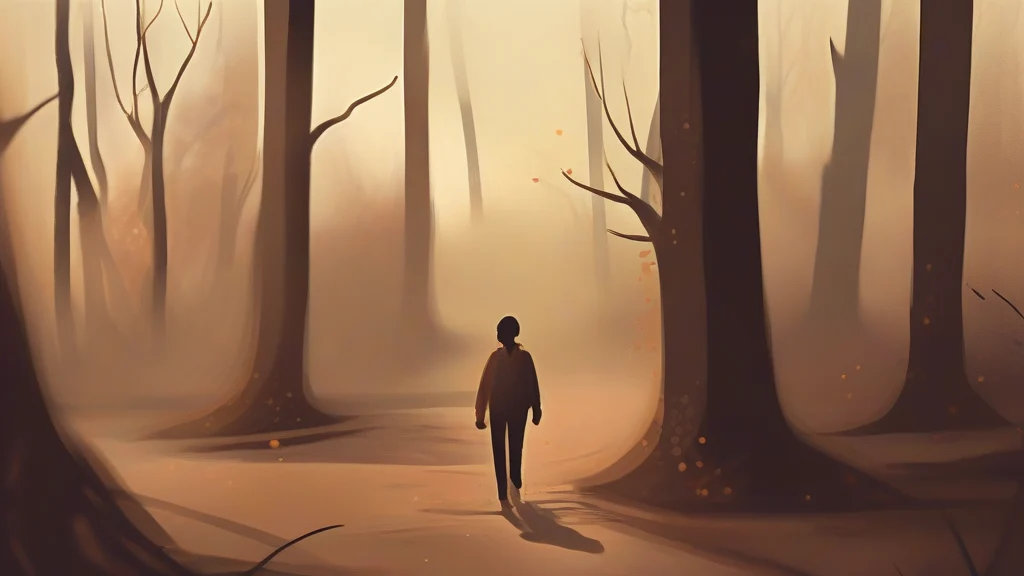
What does shambling mean?
Shambling means walking slowly and heavily, usually with the feet dragging rather than being lifted in a normal stride. The word often suggests that a person is tired, unsteady, elderly, injured, or moving with difficulty, though it can also be used playfully to exaggerate awkward movement. As an adjective, shambling describes a walk or gait with the same qualities: “The old dog moved across the room with a shambling gait.” It is common in British and American English and is more vivid than simply saying someone walked slowly, because it implies an irregular or reluctant-looking progression. The related word shambles has developed the distinct modern sense of confusion or disorder, while shamble remains the basic verb. Together, these forms are useful for describing movement that appears difficult, ungainly, or deliberately lumbering.
To walk slowly and heavily, dragging the feet, often because of tiredness, age, injury, or uncertainty of movement.
"The tired children shambled home through the rain."
Often implies an awkward, weary, or unsteady gait; it may be humorous in a light context.
Characterized by a slow, heavy, dragging, or unsteady movement.
"He crossed the floor with a shambling stride."
Commonly used before words such as walk, gait, step, or stride.
Shambling captures the particular movement of someone walking as though every step requires a small negotiation with the ground.
Reviewed by Deb Chak, Editor. AI-assisted content curated by RJS Tech Solutions LLP.
Where does shambling come from?
The modern family of shamble developed from the Middle English verb shamblen, meaning to walk unevenly or with difficulty. The deeper origin of that verb is uncertain, and it later produced both the verb shamble and the noun shambles. The present participle shambling became common as a description of a slow, dragging walk and later also came to function attributively before a noun such as walk or gait.
Related word forms
How shambling is actually used
The word is often mildly humorous or descriptive rather than strictly neutral. It can suggest weariness, old age, awkwardness, or a lack of coordination, depending on the context.
Easily confused with shambling
Shambles refers both to an old form derived from shamble and, in modern use, to a state of confusion or disorder, whereas shambling specifically describes a slow, dragging walk.
Shamble is the base verb from which shambling is formed; shambling specifically refers to the present participle or to movement characterized by a slow, dragging gait.