
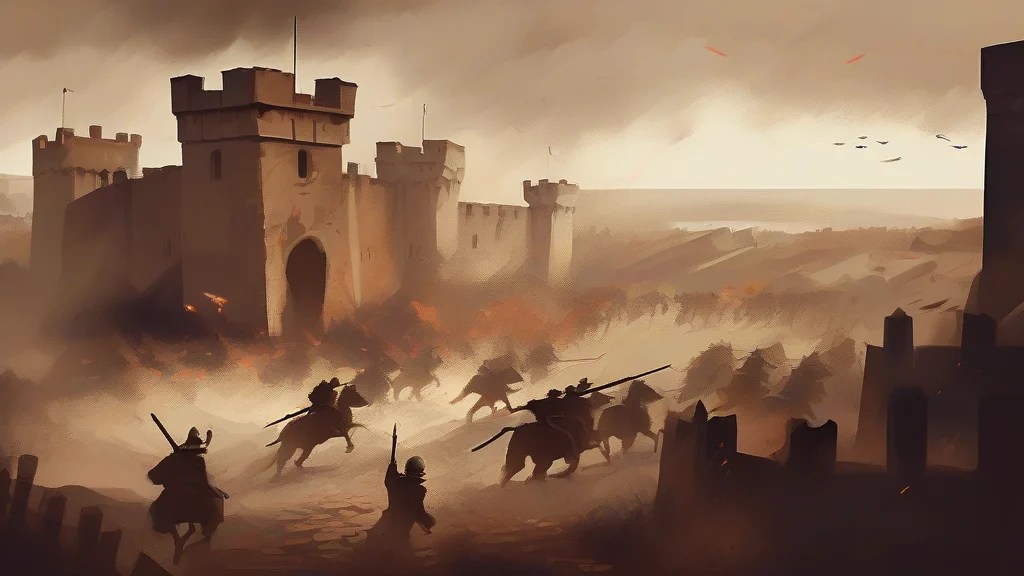
What does siege mean?
A siege is the military act of surrounding a fortified position and maintaining pressure on its defenders until they surrender, retreat, or can no longer resist. It may involve direct attacks, blockade, starvation, bombardment, or a combination of these methods. The word can also describe any prolonged and intense effort to pressure an institution, organization, or opponent, as in “the company came under siege from critics.” In its verb form, “to siege” describes carrying out such an operation. While the literal sense belongs chiefly to military history and reporting, the figurative sense is common in journalism, business, politics, and sport. The term is useful because it captures not merely an attack but sustained pressure aimed at isolating a position and wearing down the resistance of those defending it.
A prolonged military blockade or sustained attack directed at a fortified place or defensive position, with the aim of compelling surrender or withdrawal.
"The government declared that the town was under siege by rebel forces."
The figurative sense is common for intense, sustained political, institutional, or commercial pressure.
To surround an enemy position with armed forces and subject it to sustained pressure.
"The troops spent the winter besieging the enemy stronghold."
The verb is less common than the noun and is chiefly used in formal or historical military contexts.
Use the plural when referring to multiple military operations or instances of sustained pressure.
"The chroniclers described several sieges that lasted through the winter."
A siege can be won without a single direct assault: starvation, shrinking supplies, or the pressure of a prolonged blockade may force an enemy to surrender.
Reviewed by Deb Chak, Editor. AI-assisted content curated by RJS Tech Solutions LLP.
Where does siege come from?
The word entered Middle English from Old French siege, which derives from Latin obsidium, meaning a fortified place, occupation, or blockade. The Latin word is related to obsidere, “to sit at, remain at, or blockade,” from which the English verb besiege also developed. The modern military sense reflects the historical practice of surrounding a fortress or fortified settlement to prevent supplies from entering and to force its defenders to surrender.
Related word forms
How siege is actually used
In military contexts, a siege usually involves surrounding a defended position and applying sustained pressure rather than making one immediate assault. The figurative use, common in journalism and political language, describes intense, sustained opposition or pressure.
Easily confused with siege
A siege is a military blockade or sustained attack, whereas a sieve is a perforated utensil used for sifting or straining substances.