
What does silting mean?
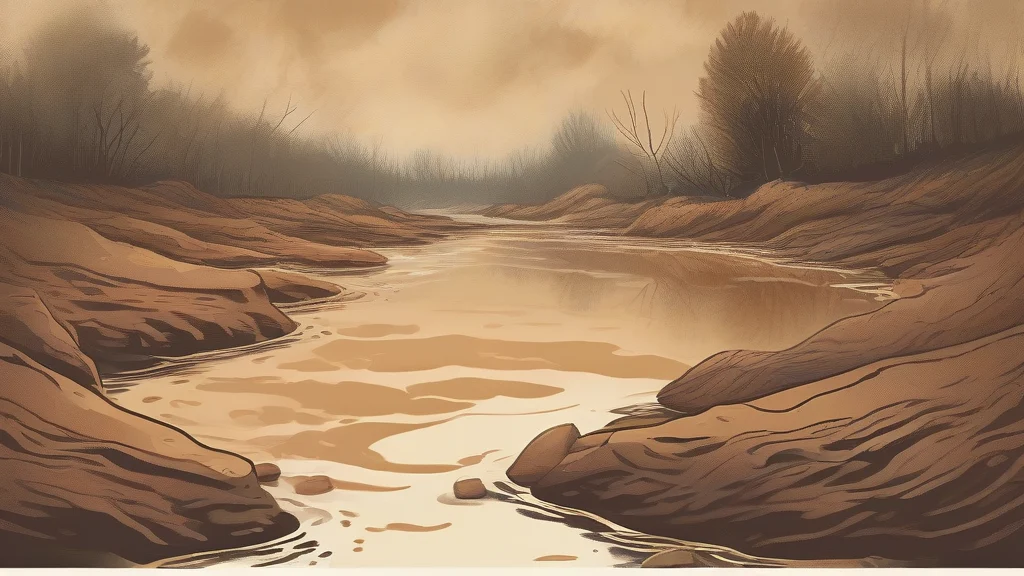
Silting is the accumulation of fine sediment, called silt, in places such as rivers, lakes, harbours, reservoirs, and estuaries. It is caused when flowing water gradually drops its sediment, and it can be accelerated by erosion, flooding, or changes in river flow. The term is especially important in water management because silting reduces the storage capacity of reservoirs, obstructs navigation channels, alters habitats, and can undermine the performance of dams and other infrastructure. In general discussion, silting often conveys the gradual filling or obstruction of a body of water. The related process is also called sedimentation, although silting is more specifically associated with the buildup of fine silt. People also speak of “harbour silting” and “reservoir silting” when describing the gradual loss of usable space or capacity over time.
The accumulation or deposition of fine sediment, especially in a river, lake, harbour, reservoir, or estuary.
"Regular dredging is necessary to prevent silting in the navigation channel."
The term is commonly used in environmental and engineering contexts.
To become filled or obstructed with silt, or to cause silt to accumulate.
"The shallow lagoon has been silting up over the past decade."
This is the present-participle or verbal form of silt and is often used in constructions such as “the harbour is silting up.”
Silting is nature's slow housekeeping problem: even clear-looking water can fill a reservoir with sediment over time.
Reviewed by Deb Chak, Editor. AI-assisted content curated by RJS Tech Solutions LLP.
Where does silting come from?
Silting derives from silt, a word for fine sediment deposited by water and, in some contexts, by wind. The suffix -ing forms a gerund-like noun denoting the process of silting or the resulting condition. Related forms include siltation, a more formal term for the process of silt deposition, and silty, an adjective describing material that contains or resembles silt.
Related word forms
How silting is actually used
The word is most common in environmental science, hydrology, civil engineering, and geography. It is usually used for the accumulation or process of accumulation, not simply for a single deposit of sediment.
Easily confused with silting
Silting usually describes the practical process or effect of silt accumulating, whereas siltation more formally names the geological process of sedimentation.
Sedimentation is the broader process of depositing sediment, while silting specifically emphasizes the accumulation of fine silt that can obstruct waterways or reduce reservoir capacity.