
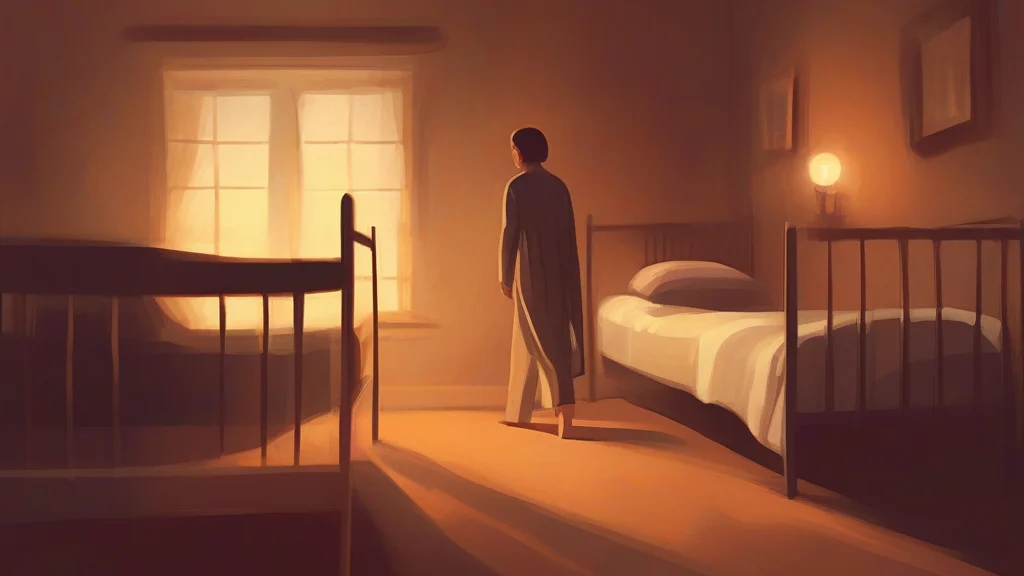
What does sleepwalk mean?
Sleepwalk means to walk while asleep, usually without knowing that one is doing so. The behavior can involve simple movement such as sitting up, standing, or walking through a familiar room, and it may occur during deep sleep rather than during a dream. In figurative use, “to sleepwalk through something” means to proceed automatically or without giving proper attention, as in sleepwalking through a difficult decision or a crowded airport. The term is also used medically in expressions such as “sleepwalking disorder,” referring to a parasomnia involving unwanted movement during sleep. Although the expression sounds like a modern compound, its elements are familiar: sleep refers to the state of unconsciousness and walk to bodily movement. The related forms sleepwalker and sleepwalking are considerably more common than the noun sleepwalk.
To walk while asleep, without being consciously aware of the movement.
"The child sleepwalked into his parents' bedroom."
Often used in medical or descriptive contexts; figurative uses are also established.
An act or instance of walking while asleep.
"The noise was caused by a sleepwalk across the upstairs landing."
This noun is relatively uncommon; sleepwalking is usually the more natural form.
The name is unusually literal: a sleepwalk is literally walking while asleep.
Reviewed by Deb Chak, Editor. AI-assisted content curated by RJS Tech Solutions LLP.
Where does sleepwalk come from?
Sleepwalk is a compound formed from the established English words sleep and walk. Its sense is attested in the 19th century, when medical and popular writers increasingly used similarly transparent compounds for sleep-related conditions. Sleep has Old English roots and belongs to a Germanic family with cognates in related languages, while walk has its own Germanic history and cognate forms in modern Germanic languages.
Related word forms
How sleepwalk is actually used
The verb is most often used with people who walk during sleep, although figurative uses such as “sleepwalk through a decision” are possible. The related noun “sleepwalk” is much less common than the noun “sleepwalking.”