
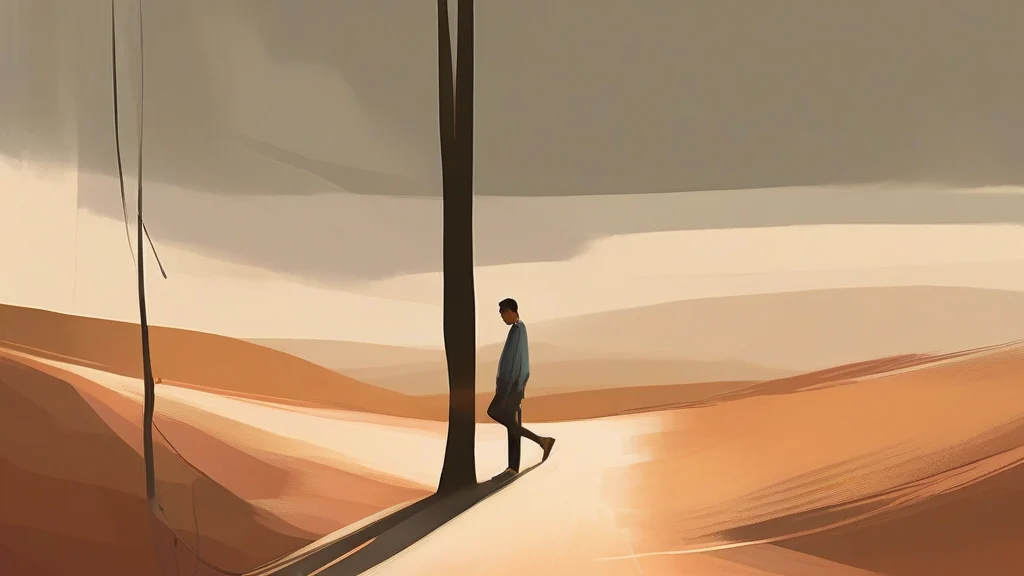
What does slouching mean?
Slouching means sitting, standing, or moving with the shoulders and upper body bent or drooping forward. The word commonly describes a posture that looks relaxed, careless, or insufficiently upright, as when someone occupies more space in a chair than their position requires. It can also imply slow, undignified movement, especially in phrases such as slouching through the streets. Slouching often carries a mildly disapproving connotation because it suggests laziness or a lack of attention to posture, but in informal contexts it can simply describe a comfortable, informal pose. As a noun, slouching names the behavior itself rather than a particular act. The related adjective slouchy is sometimes used for clothing, furniture, or a person whose posture or manner appears notably loose and drooping.
To bend or move with the shoulders and upper body drooping forward.
"Try not to slouch when you are sitting at the desk."
Also used figuratively for walking or moving in a loose, lazy manner.
The act or habit of sitting, standing, or moving with a drooping posture.
"The teacher's complaint about his slouching made everyone straighten up."
Usually used as an uncountable noun for a manner of posture or movement.
Slouching is the art of making your posture look like a question mark.
Reviewed by Deb Chak, Editor. AI-assisted content curated by RJS Tech Solutions LLP.
Etymology of slouching
Slouching was formed from the English verb slouch by adding the present-participle suffix -ing. The deeper origin of slouch is uncertain, and no secure cognates can be identified with confidence, so claims that it derives from a particular continental language should be treated cautiously.
Related word forms
How slouching is actually used
In its most common sense, slouching describes a posture rather than a medical condition. It can be mildly critical when referring to someone's conduct in a classroom, workplace, or formal setting, though it is generally less forceful than a reprimand.
Easily confused with slouching
Slouching emphasizes a sustained posture with rounded or lowered shoulders, whereas slumping often suggests a sudden or complete collapse of the body.