
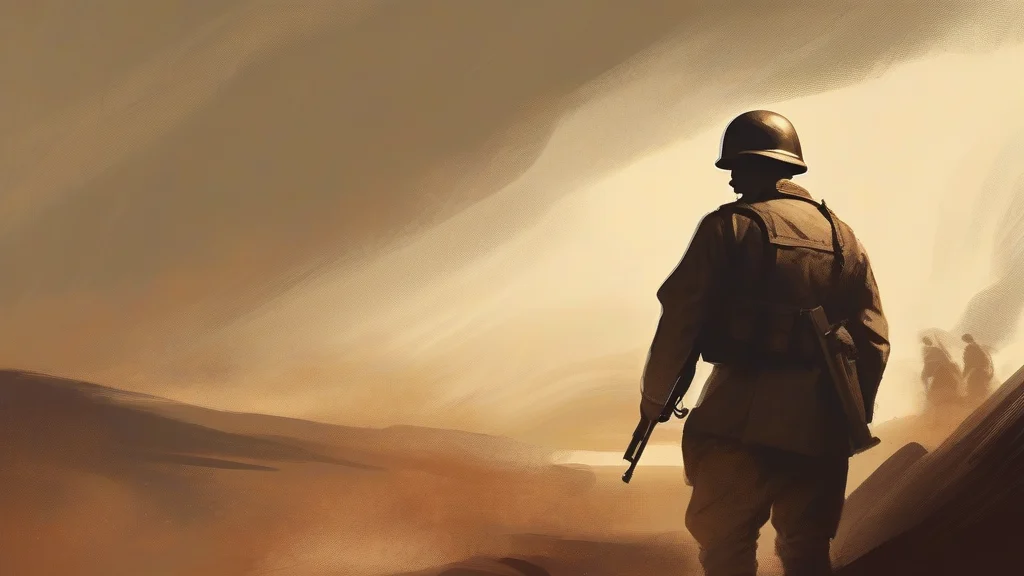
What does soldatesque mean?
Soldatesque means resembling a soldier or characteristic of military life. The adjective may describe a person's posture, clothing, movement, or manner, particularly when these convey discipline, firmness, readiness, or an impersonal command. It can also characterize scenes, images, or writing that evoke soldiers, warfare, and military austerity. Because the word carries a distinctly literary tone, it is generally more conspicuous and stylistically pointed than the plainer word “military.” It may carry either approving associations of courage and discipline or critical associations of harshness, rigidity, and aggressive conformity, depending on context. The term is useful when a writer wants to focus not merely on something military, but on a distinctly soldier-like quality or atmosphere.
adjectiveResembling or characteristic of a soldier, especially in bearing, discipline, or manner. It may also describe something evocative of military life.
- Resembling a soldier in bearing, appearance, or manner.
- Characteristic of soldiers, military discipline, or warfare.
"The officer's soldatesque bearing commanded the attention of everyone in the room."
"She marched down the corridor with a stiff, soldatesque stride."
"The film is filled with cold landscapes and soldatesque images of endurance."
Soldatesque gives ordinary speech a crisp military bearing, as though describing someone stepping smartly into formation.
Reviewed by Deb Chak, Editor. AI-assisted content curated by RJS Tech Solutions LLP.
Etymology of soldatesque
The word comes from French soldatesque, formed from soldate, an older form of “soldier,” together with the suffix -esque, which can indicate resemblance or a characteristic style. English borrowed the word directly from French. Its ultimate roots lie in the Latin-language vocabulary for soldiers, and it is cognate with English “soldier” and “solder.”
How soldatesque is actually used
This is a formal and relatively uncommon literary word. It is usually descriptive rather than neutral and can suggest military rigidity, discipline, bravado, or an impersonal command.