
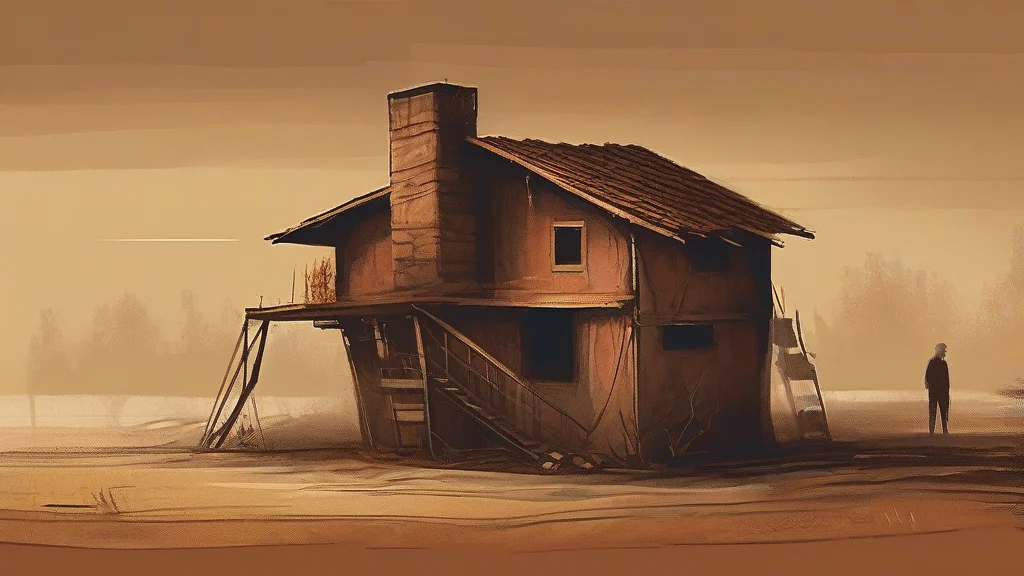
What does squattering mean?
Squattering is the act of occupying land, a building, or another property without the owner's permission or a legally recognized right to be there. Its best-known use is in discussions of housing, land disputes, protest encampments, and urban development, where it identifies an unauthorized but sometimes socially significant form of occupation. The word may also describe sitting or crouching low, although that sense is much less prominent in modern usage. In legal contexts, squatters' rights can sometimes arise through a combination of continuous occupation, open and notorious use, and the passage of time, depending on the jurisdiction. Outside legal discussion, the word often carries a critical or disruptive connotation because occupation without consent conflicts with established property rights. Despite that negativity, squattering has also been used neutrally to describe communities or individuals living in unused buildings, including long-term protest movements.
verbTo occupy land, a building, or other property without the owner's permission or legal right to do so. It can also describe sitting or crouching low.
- Occupying land, a building, or other property without permission or legal entitlement.
- Sitting or crouching low, especially as a deliberate posture.
"The tenants continued squattering in the empty factory despite the landlord's warnings."
"Activists were accused of squatting in the vacant hospital."
"She squatted beside the river, watching the current."
In legal and social contexts, squattering can mean taking over property, not merely crouching down.
Reviewed by Deb Chak, Editor. AI-assisted content curated by RJS Tech Solutions LLP.
Etymology of squattering
Squattering was formed from the English verb squat. The parent word appeared in Middle English and was used both for sitting low and, later, for occupying property without authorization. Its ultimate origin is disputed, so it cannot confidently be traced to a single older language.
Related word forms
How squattering is actually used
The term is common in legal, political, and housing contexts. It may be neutral when describing occupation under a disputed property claim but can sound pejorative when applied to protest encampments or people perceived as occupying property without authorization.