
What does tabour mean?
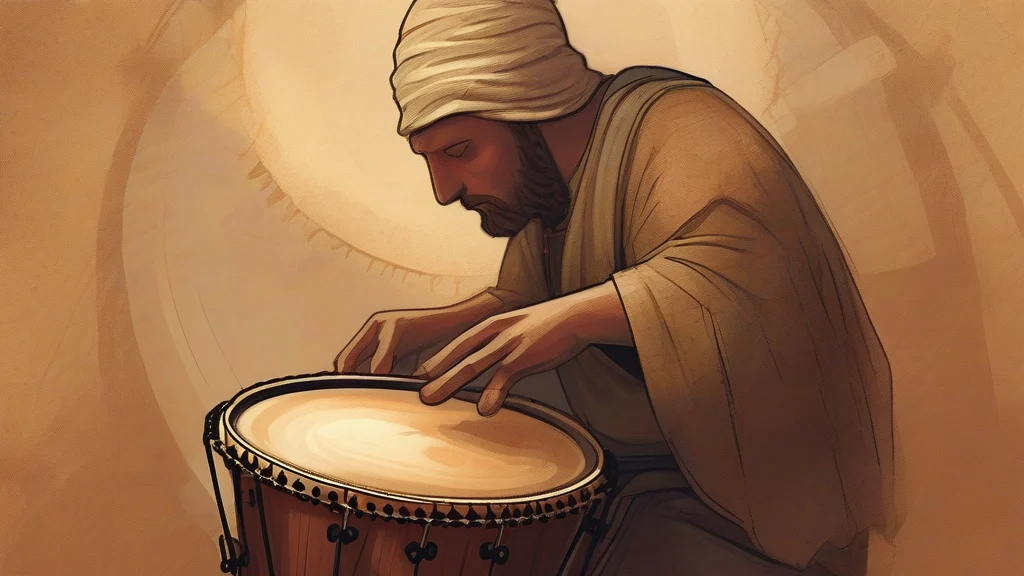
A tabour is a small drum, particularly one associated with traditional, historical, marching, or military music. It is distinguished from larger drums by its relatively compact size and typically its use to mark a steady or ceremonial rhythm. Today the word is uncommon in ordinary modern English, but it remains familiar in descriptions of historical music, folk traditions, and processions. British English generally favors tabour, whereas North American English more commonly uses tabor. In literary and historical writing, the word may evoke the sound of a compact military or marching drum. It is also sometimes confused with tambourine, although the two instruments are not the same: a tabour is a small drum, whereas a tambourine is a shallow frame drum with jingles or metal discs around its rim.
nounA small drum, especially one used in traditional or historical music. The word is also sometimes used for a small drum used by a drummer in marching or military music.
- A small drum, especially one used in traditional, historical, marching, or military music.
"The drummer struck the tabour with a slow, measured rhythm."
"The tabour announced the arrival of the procession."
"She played the tabour in a folk ensemble."
The regular plural is tabours.
"Several tabours were arranged on a stand behind the musicians."
Tabour is the British name for a small drum, while its cousin tabor became more common in North American English.
Reviewed by Deb Chak, Editor. AI-assisted content curated by RJS Tech Solutions LLP.
Where does tabour come from?
The word entered Middle English through Old French tabour. Old French borrowed it from Arabic tabūr, which in turn reflects a Persian term associated with a drum. The English form developed into the regional spellings tabour and tabor, while related forms such as tambour and tambourine also continued the same broad musical tradition.
How tabour is actually used
The word is now uncommon and has a traditional or historical flavour. It is chiefly British; in North American English, tabor is the more usual term.
Easily confused with tabour
Both words denote a small drum, with tabor especially associated with North American usage and tabour with British usage.