
What does tarsia mean?
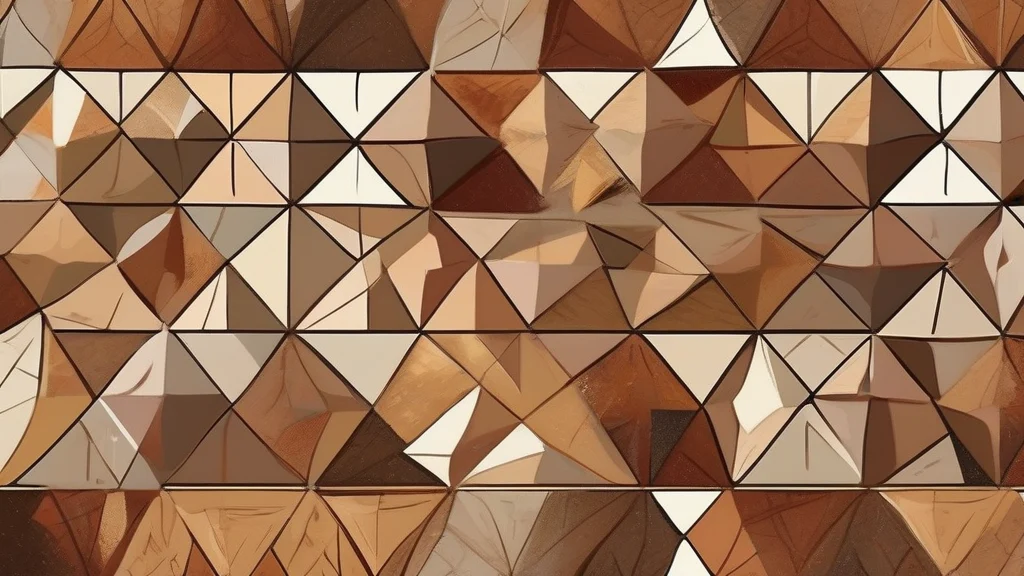
Tarsia is a decorative inlay technique in which contrasting materials, most commonly different woods, are precisely fitted together to create ornamental patterns or pictures. The term may denote the craft itself, an individual panel made in this way, or a complete piece of furniture decorated with such inlay. Tarsia became especially associated with Italian Renaissance cabinetmaking, although related methods of fitting contrasting materials into a design are found in several European decorative arts. Its appeal lies in the transformation of ordinary surfaces into intricate scenes, patterns, or fields of colour. In modern usage, the word is mainly formal and specialized, appearing in furniture history, conservation, auction descriptions, and museum catalogues. It overlaps with terms such as marquetry and intarsia but is especially associated with richly ornamented Renaissance-style cabinetwork. The English word entered use in the early nineteenth century through Italian decorative-arts terminology.
nounTarsia is decorative inlay made by fitting contrasting materials, especially different woods, into an ornamental or pictorial design; it can also refer to the craft of making such work.
- The craft or technique of making decorative inlay, especially by fitting contrasting pieces of wood into an ornamental or pictorial design.
- An individual panel, object, or work of decorative inlay made by this technique.
"The cabinet is decorated with Florentine tarsia depicting birds and scrolling foliage."
"A master cabinetmaker restored the damaged tarsia panels on an eighteenth-century escritoire."
"The museum's collection includes examples of Florentine tarsia and other Renaissance decorative arts."
The plural is used for individual decorative panels, objects, or works made using the tarsia technique.
"Several intricately inlaid tarsias survive from the workshop."
With tarsia, skilled woodworkers could transform a plain cabinet into a jewel-like landscape of birds, flowers, and geometric patterns.
Reviewed by Deb Chak, Editor. AI-assisted content curated by RJS Tech Solutions LLP.
Where does tarsia come from?
The English word was borrowed in the early nineteenth century from Italian tarsia, a term for inlaid or marquetry work. Italian tarsia developed from Medieval Latin tarsia. The ultimate origin of the Latin form is uncertain, so a more specific derivation should not be assumed. Spanish taracea, Portuguese taracea, and French tarsie entered through the same Italian decorative-arts tradition.
Related word forms
How tarsia is actually used
Tarsia is chiefly used in specialist and historical discussions of furniture, cabinetmaking, and decorative arts. It is usually counted as a mass noun for the craft or technique, while tarsias can denote individual inlaid panels or works.
Easily confused with tarsia
Tarsia is a broad term for decorative inlay, while intarsia more specifically describes a technique in which contrasting pieces, often wood, are fitted together to create a design.