
What does teeterboard mean?
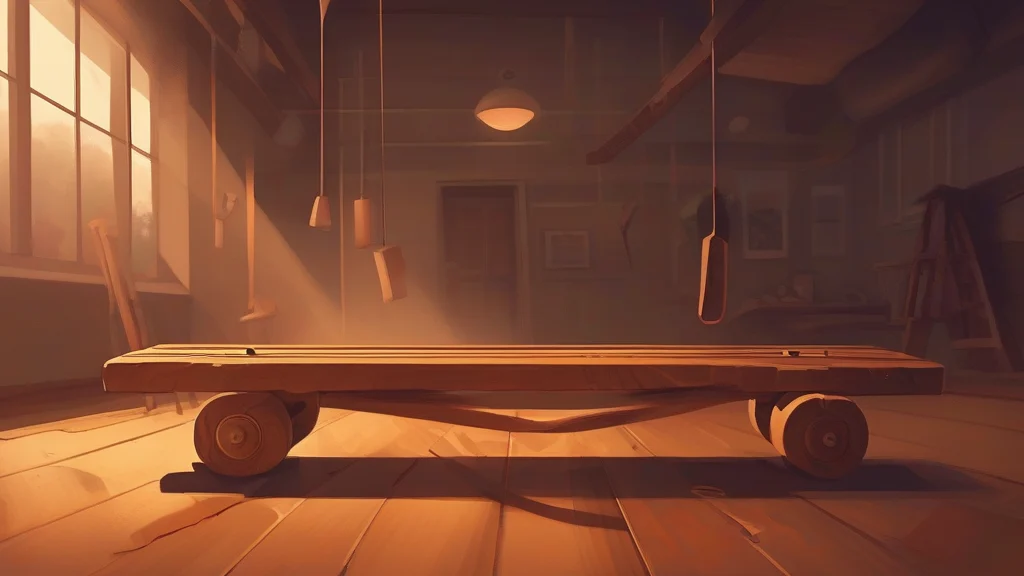
A teeterboard is a long, narrow board balanced on a central fulcrum and used by one or more riders much like a seesaw. Its simple construction creates a sensitive balance: a slight shift of weight makes one end rise as the other falls. The word is especially associated with playground equipment, while seesaw is the more familiar general term in ordinary English and teeter-totter is also common in North America. Teeterboard is nevertheless a useful label when the board itself, its rocking action, or that characteristic form is under discussion. The name reflects the motion involved: the mounted board appears to teeter as the riders move. Its combination of balance, motion, and play gives the word a distinctly physical quality, and it evokes the familiar exchange of weight and momentum between riders at opposite ends.
nounA long, narrow board supported at its midpoint on a fulcrum and balanced like a seesaw.
- A long, narrow board balanced on a central fulcrum and used like a seesaw, typically with riders at opposite ends.
"The children took turns riding the teeterboard in the playground."
"The children took turns on the teeterboard beside the swings."
"A wooden teeterboard stood at the center of the playground."
The standard plural is used when referring to more than one teeterboard.
"The playground has two teeterboards and a set of swings."
One plank and one fulcrum: that is the whole recipe for the teeterboard’s famously up-and-down physics.
Reviewed by Deb Chak, Editor. AI-assisted content curated by RJS Tech Solutions LLP.
Where does teeterboard come from?
Teeterboard is an English compound of teeter and board. The word teeter entered English from Dutch titeren, meaning to stagger, wobble, or totter, while board denotes the flat piece of timber or similar material on which the riders sit. The compound aptly describes a board mounted so that it rocks or teeters around its central support.
How teeterboard is actually used
The word is countable and less usual in contemporary English than seesaw. The alternative teeter-totter is especially common in North America.