
What does thornbill mean?
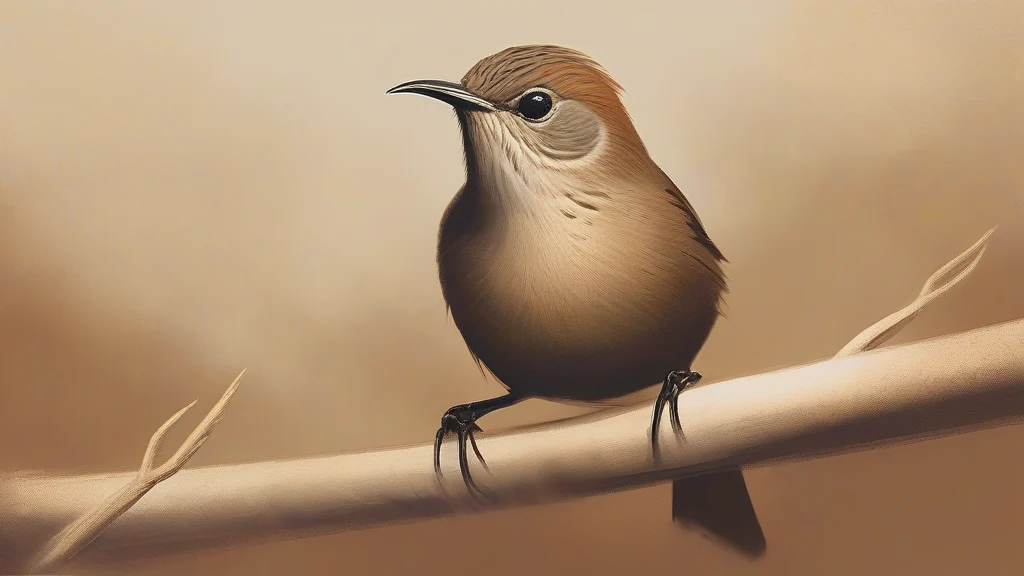
A thornbill is a small perching bird found chiefly in Australia and New Guinea. The name refers to the group’s slender, sharply pointed bill, which is well suited to gleaning small insects and other invertebrates from foliage and bark. Several recognizable species bear the name, including the yellow thornbill, brown thornbill, striated thornbill, and western thornbill. In ordinary writing, “thornbill” may refer to the broader group of similar birds, while in field guides and detailed natural-history accounts it is more often attached to a particular species. The word is neutral in register and is especially common in Australian birdwatching and conservation contexts. Although small and easily overlooked among dense shrubs or eucalyptus foliage, thornbills can be conspicuous because of their calls, energetic movements, and, in some species, bright patches of plumage. The term should not be confused with “hornbill,” which denotes a substantially different group of mostly tropical birds with large bills and prominent casques.
nounAny of various small perching birds in the family Acanthizidae, especially those in the genus Acanthiza, having slender, sharply pointed bills.
- A small bird of the family Acanthizidae, found especially in Australia and New Guinea, with a slender, pointed bill.
"A brown thornbill flitted through the tea tree, gleaning tiny insects from the leaves."
"The field guide lists the yellow thornbill among the small birds found in the park."
"We heard a thornbill calling from the tea tree before glimpsing it among the branches."
The standard plural adds -s to the noun.
"Conservationists monitored several thornbills nesting along the woodland edge."
A yellow thornbill can turn a patch of Australian scrub into a sudden flash of color.
Reviewed by Deb Chak, Editor. AI-assisted content curated by RJS Tech Solutions LLP.
Etymology of thornbill
Thornbill is an English compound formed from thorn and bill. Thorn continues Old English þorn, meaning a sharp or prickly projection, while bill continues Old English bile, the source of the modern sense for a bird’s beak. The compound naming reflects the bird’s characteristically fine, pointed bill; cognate forms of the elements occur in other Germanic languages.
Related word forms
How thornbill is actually used
The term is neutral and is used chiefly in ornithology, birdwatching, and Australian nature writing. Species are normally identified by additional names, such as yellow thornbill or brown thornbill.
Easily confused with thornbill
A hornbill is a much larger tropical bird with a conspicuous casque or helmet on its bill, whereas a thornbill is a small perching bird with a fine, pointed bill.