
What does timbal mean?
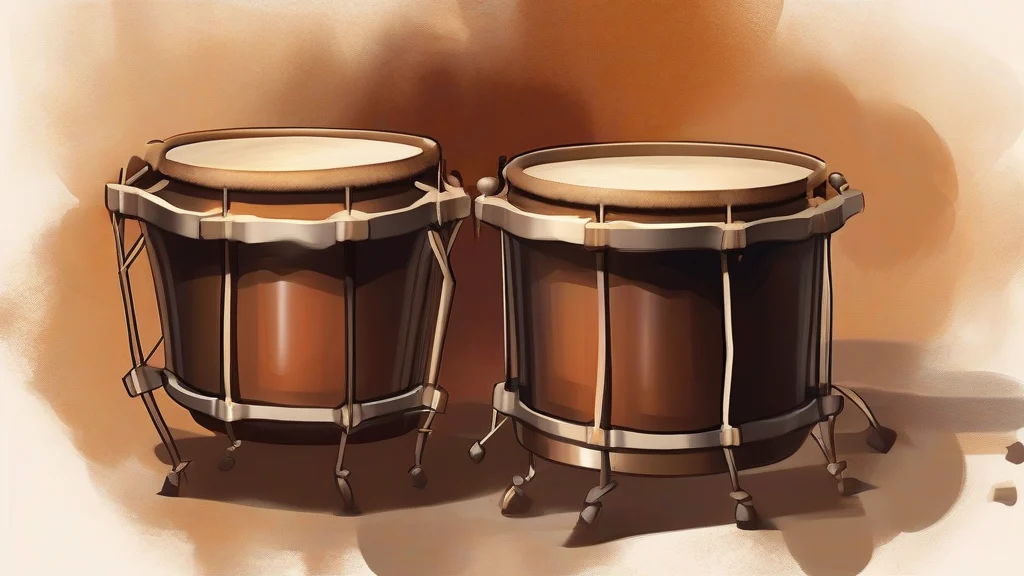
Timbal is a historical noun for a kettledrum, particularly one belonging to a pair used by cavalry or mounted military bands. Such instruments were associated with mounted troops and helped make the rhythm of an approaching or assembling force audible at a distance. The word is uncommon in everyday modern English and usually appears in historical, musical, or military contexts. Its association with cavalry gives it a ceremonial and martial character that distinguishes it from the more familiar modern orchestral timpani. Timbal also has a broader dictionary sense encompassing a kettledrum without the specifically military association. Etymologically, it belongs to a family of words derived ultimately from Greek tympanon, a term for a drum or percussion instrument, through Latin and continental European languages. The word is worth knowing because it preserves the history of percussion instruments and the practical role rhythm played in older military music.
nounA kettledrum, especially one of a pair of kettledrums formerly mounted for cavalry or military use.
- A kettledrum, particularly one of a pair formerly mounted for cavalry or military bands.
"The regiment entered the square to the steady roll of the cavalry timbals."
"The regiment entered the square to the steady roll of the cavalry timbals."
"She listened as the distant timbals announced the column's approach."
The standard plural is timbals; the expression a pair of timbals refers to a matched set of kettledrums.
"A pair of timbals sounded across the parade ground."
A timbal was a kettledrum on horseback: cavalry could literally bring the beat of battle with them.
Reviewed by Deb Chak, Editor. AI-assisted content curated by RJS Tech Solutions LLP.
Where does timbal come from?
The English word came through French timbale and ultimately derives from Latin tymbalum, which was borrowed from Greek tympanon. The Greek term referred to a drum or other percussion instrument; the same root also underlies English timpani and related forms. In historical military usage, timbal commonly referred to one of a pair of kettledrums carried with cavalry or mounted bands.
How timbal is actually used
The term has a historical, martial register and survives chiefly in historical writing, musicological discussion, and accounts of cavalry music.
Easily confused with timbal
A timbal is a percussion instrument, whereas timbre refers to the distinctive character or quality of a sound.
Timbal is chiefly a historical term for a military kettledrum, while timpani denotes the modern orchestral family of kettledrums.