
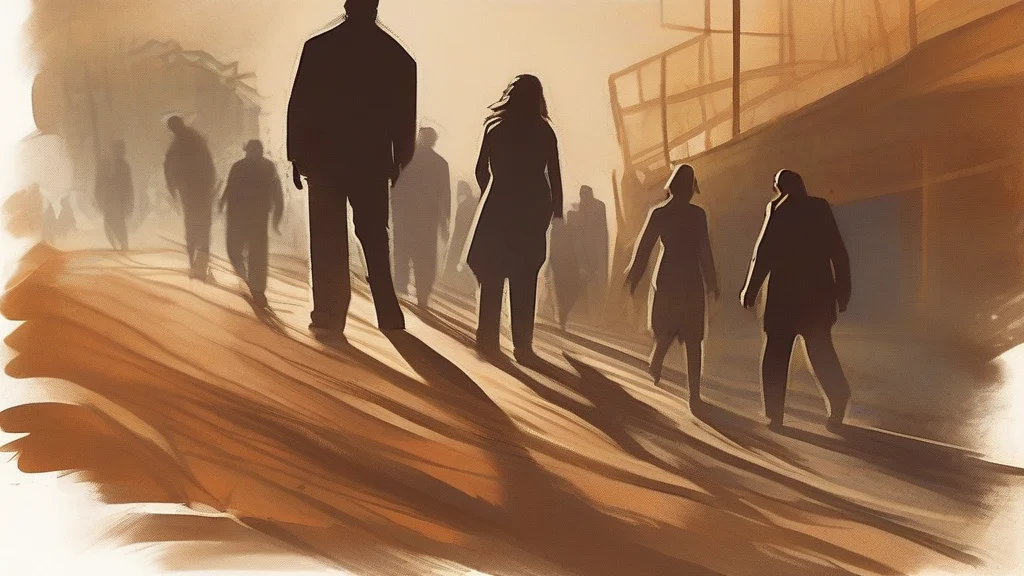
What does trampling mean?
Trampling is the present-participle and gerund form of trample, meaning to walk on something repeatedly so that it is crushed, damaged, or flattened. Its figurative use is equally familiar: people trample on rights, feelings, or principles when they treat them as unimportant and proceed regardless. This often carries a strongly negative moral judgement, suggesting carelessness, oppression, or deliberate disrespect, although the literal sense may simply describe an unavoidable physical action. In descriptive writing, trampling can evoke trampled grass, flowers, snow, or soil and the resulting damage; in political, legal, and figurative contexts, it suggests power operating without regard for those affected. The word is common in both British and American English and can function as a gerund in constructions such as “stop them trampling the grass” or as a noun meaning the action itself. “Trampling” is therefore useful because it connects a concrete physical meaning with a vivid metaphor for disregarding people, rights, and social values.
To walk repeatedly on something, crushing, damaging, or flattening it underfoot; figuratively, to disregard someone's rights, feelings, or principles.
"They kept trampling the tender seedlings while trying to find a clearer path."
The figurative use is strongly evaluative and normally implies a failure to respect people, rights, or important principles.
The action of walking on and crushing or damaging something underfoot.
"The trampling of the wildflowers along the path was clearly visible."
The noun is usually an uncountable mass noun, although plural forms occur rarely when separate instances of the action are being counted.
Rare and generally unnecessary; the usual noun form is the uncountable “trampling.”
"Several tramplings of the crop were reported after the storm."
To trample is to crush with your feet; to trample on an idea is to declare that dignity is merely an obstacle.
Reviewed by Deb Chak, Editor. AI-assisted content curated by RJS Tech Solutions LLP.
Where does trampling come from?
The verb trample is attested in English by the early 17th century and belongs to a Germanic family of words meaning “to tread” or “to step heavily.” Its precise ultimate origin is uncertain, although related forms exist in German and Dutch. The gerund trampling follows the regular English formation in -ing and also serves as a noun denoting the action.
Related word forms
How trampling is actually used
The literal sense can be neutral and descriptive, though it often implies damage caused by careless or repeated movement. The figurative sense is strongly negative and conveys disregard, oppression, or lack of respect.
Easily confused with trampling
Tamping usually means compacting soil, sand, or another material by pressing or pounding it, whereas trampling specifically involves walking on something and often crushing it underfoot.