
What does trenching mean?
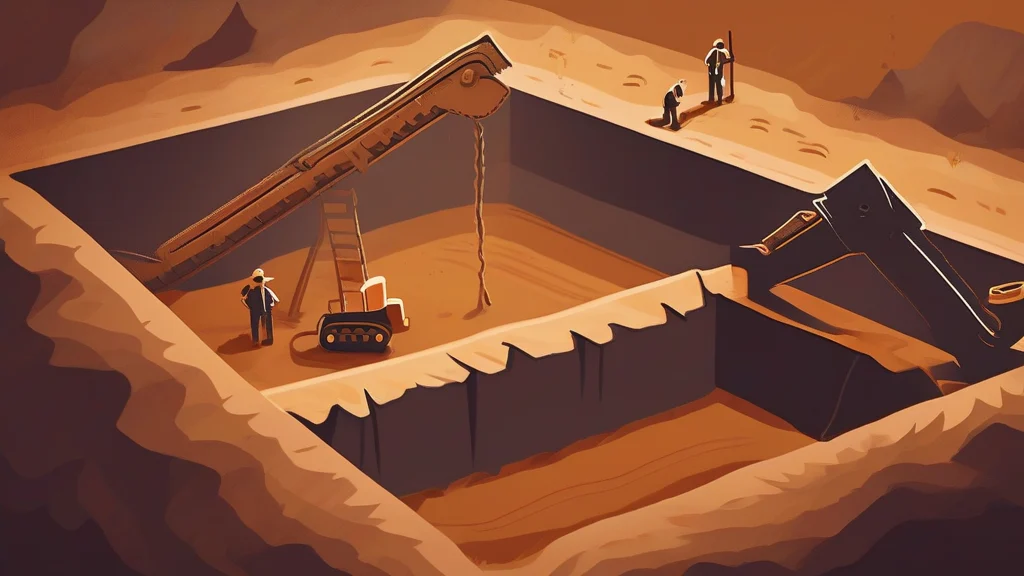
Trenching means digging a long, narrow channel in the ground. It can refer to the activity itself, as in preparing a cable trench, or to the resulting excavation, as in archaeological trenching. The word is especially common in construction, civil engineering, agriculture, and military contexts. Contractors use it when describing the excavation needed for foundations, pipelines, drainage systems, or underground utilities, while military histories use it for the construction of defensive ditches. As a verb, trenching describes the physical process of making such cuts: a crew may be trenching across a road before laying a pipe. It is generally more technical than the plainer word “digging,” suggesting a deliberate, continuous, and usually narrow excavation. Trenching is also distinct from general excavation because the work characteristically produces long channels rather than broad holes or irregularly shaped pits.
The activity of digging long, narrow channels in the ground, or a long, narrow excavation made in the soil.
"Trenching for the underground cable began early in the morning."
Usually treated as an activity or mass noun in modern technical usage.
To dig a long, narrow channel in the ground or cut a long, narrow trench through soil.
"The crew spent the morning trenching for the new sewer line."
This is the present participle and gerund form of “trench,” used in both ongoing actions and noun phrases such as “trenching equipment.”
Usually uncountable in modern usage; the plural form is uncommon and may refer to multiple excavations or lengths of trench.
"The archaeologists carefully documented the trenchings before widening them."
Trenching transforms an open landscape into channels of shelter, transport, drainage, and defense.
Reviewed by Deb Chak, Editor. AI-assisted content curated by RJS Tech Solutions LLP.
Etymology of trenching
English “trench” developed from Old French words meaning “to cut” or “to dig,” ultimately from Latin roots associated with cutting. The present English form “trenching” uses the standard verbal-noun and participial ending -ing with that inherited verb. Related forms such as “trenchant” and “trencher” also reflect the same Old French and Latin ancestry.
How trenching is actually used
The word is common in civil engineering, construction, agriculture, and military history. In everyday speech, it is usually more technical than simply saying that someone is digging a ditch.