
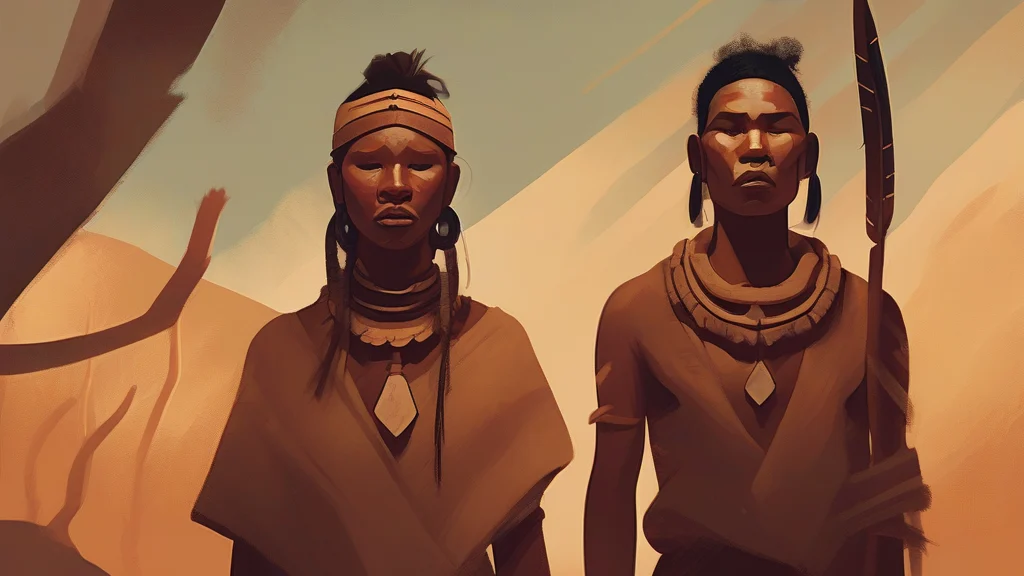
What does tribespeople mean?
“Tribespeople” is the plural of “tribesperson” and denotes people who belong to a tribe. It is standard in British and American English and is especially common in discussions of customary law, traditional governance, community rights, anthropology, and the history of Indigenous peoples. In context, the word may emphasize collective identity, shared ancestry, traditions, or allegiance rather than merely naming individuals who happen to share a tribal affiliation. “Tribesman” and “tribeswoman” remain familiar gendered forms, while “tribespeople” provides a neutral alternative and emphasizes the group as a whole. The term is related to “tribe,” which entered English through French from the Latin word “tribus,” and to “people,” inherited from Old English. “Tribespeople” is a useful word because it combines a clearly communal meaning with a modern, gender-neutral plural form. It should nevertheless be used precisely, particularly where different communities have distinct identities, histories, and political statuses that a generic reference to “tribespeople” might obscure.
plural nounPeople who belong to a tribe, viewed collectively as members of an ethnic, social, or political community. The standard singular is “tribesperson.”
- People who belong to a tribe, especially as a collective community with shared ancestry, customs, traditions, or political organization.
"Local tribespeople welcomed the delegation with a traditional ceremony."
"Tribespeople from the northern settlements attended the council."
"The museum works closely with local tribespeople to preserve traditional ecological knowledge."
This is the standard plural of “tribesperson.” Gendered alternatives are “tribesmen” and “tribeswomen.”
"The tribespeople prepared for the seasonal gathering."
“Tribespeople” has no ordinary singular formed by simply removing an “s”; its standard singular is the deliberately neutral “tribesperson.”
Reviewed by Deb Chak, Editor. AI-assisted content curated by RJS Tech Solutions LLP.
Where does tribespeople come from?
“Tribespeople” is a compound of “tribe” and “people” formed during the 19th century. “Tribe” came into English through Old French from Latin “tribus,” while “people” is inherited from Old English “þēople.” Related English words such as “tribal,” “tribune,” “tribunal,” and “tribunate” ultimately trace to the same Latin root.
Related word forms
How tribespeople is actually used
Standard in British and American English. It is often collective in emphasis, highlighting membership in a community rather than an individual. When describing Indigenous peoples, additional context may be needed because distinct communities should not be treated as interchangeable.
Easily confused with tribespeople
“Tribesmen” is the plural of “tribesman” and retains a gendered form, whereas “tribespeople” is the neutral plural corresponding to “tribesperson.”