
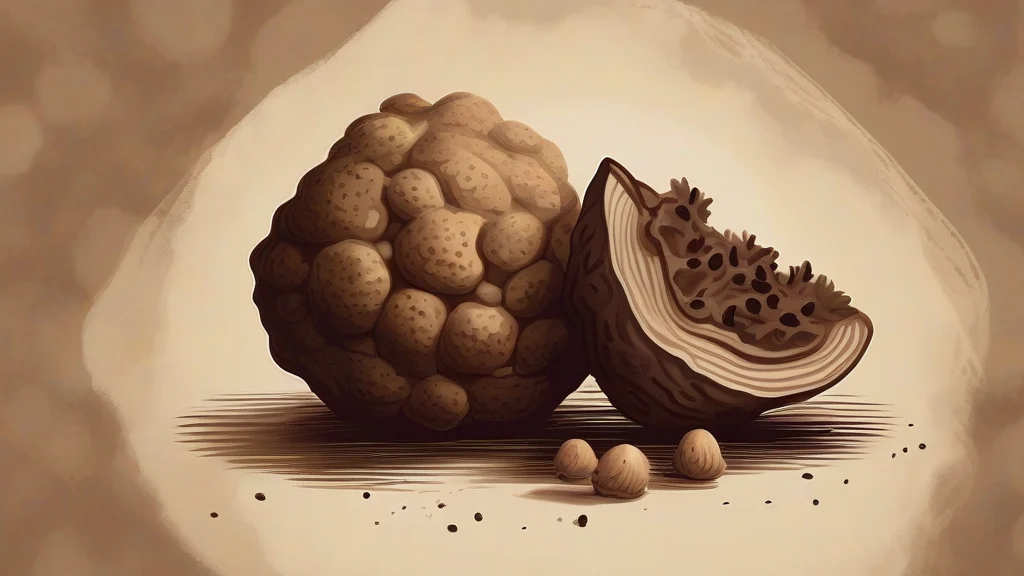
What does truffle mean?
Truffle most commonly denotes an underground fungus, especially the aromatic kinds prized in European cooking. Black and white varieties are the best known, although many different species are called truffles. Fresh specimens may be served whole or shaved over dishes, while dried truffles and truffle oil provide concentrated flavor. Outside cookery, “truffle” can refer to the exceptional sense of smell of a dog trained to find these fungi, giving rise to comparisons such as “a nose like a truffle.” The verb “to truffle” is rare: it means to search for or detect something by scent. The culinary sense dominates modern usage, while the canine and verbal senses are specialized. Historically, underground fungi were difficult to cultivate and locate, so they became associated with rarity and luxury. Today, trained dogs remain important for finding valuable specimens, and the word carries both gastronomic prestige and an unusual association with extraordinary scenting ability.
A fungus that grows underground, especially an edible one valued for its distinctive aroma and flavor; by extension, the unusually keen sense of smell of a dog trained to find such fungi.
"They served roast chicken with a sauce flavored by black truffle."
The fungus sense is dominant in modern English. The canine sense is specialized and often occurs in comparisons describing a dog's exceptional sense of smell.
To search for, detect, or discover something by scent, especially underground fungi.
"The dog truffled the soil until it found the hidden fungus."
This verbal use is rare and most likely to appear in hunting, scent-tracking, or specialist contexts.
The standard plural is used when referring to individual fungi or multiple truffles.
"Fresh truffles are shaved directly over the finished dish."
Truffles may grow underground, but their scent—and the noses trained to detect it—can command extraordinary prices.
Reviewed by Deb Chak, Editor. AI-assisted content curated by RJS Tech Solutions LLP.
Etymology of truffle
English borrowed the word from French truffe, which in turn came from Italian tartufo. These forms are commonly traced to Latin tuber, although the precise ancient development is not entirely certain. The modern culinary sense developed alongside the older use for underground fungi and the distinctive scenting ability of truffle-finding dogs.
Related word forms
How truffle is actually used
The culinary sense dominates ordinary modern usage. The canine sense is specialized, while the verb is rare and associated mainly with scent-tracking or searching by smell.
Easily confused with truffle
A truffle is an underground fungus, whereas a turtle is a reptile.