
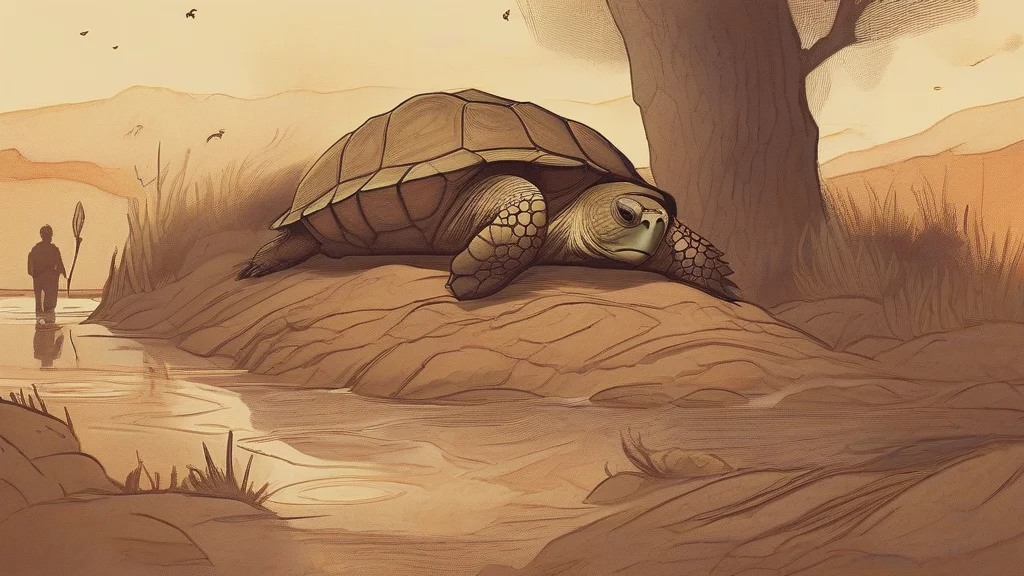
What does turtling mean?
Turtling is an uncommon word with two connected meanings. In diving, it describes an inversion: the diver turns upside down, usually head downward, to change direction, examine the surroundings, or perform a maneuver. In older wildlife and hunting contexts, turtling means turning a turtle onto its back, traditionally as a way to catch or restrain it. The latter sense can be unsuitable for describing contemporary wildlife handling unless the procedure is explicitly non-harmful. Both meanings ultimately rely on the association between a turtle and an animal lying inverted on its back. Although the word is not common in everyday speech, it is useful in specialized writing about diving and in historical descriptions of turtle-catching. The diving meaning has also given the word a mildly playful quality: a person who swims upside down can jokingly be said to be “turtling.”
The act of moving into an upside-down position, especially by diving head downward, or of overturning a turtle.
"The instructor described turtling as a controlled inversion used during the descent."
The diving sense is specialized. The sense referring to overturning turtles is chiefly historical or associated with turtle-catching.
To move or swim upside down, especially by turning head downward; also, to overturn a turtle.
"The diver began turtling and descended slowly toward the reef."
In modern specialist usage, the word usually refers to an upside-down diving maneuver.
Possible but rare; the uncountable form is normally preferred when referring to the activity.
"Veteran handlers demonstrated several careful turtlings before the release."
The oddest part of turtling is that a human diver can mimic what happens when a turtle is flipped onto its back.
Reviewed by Deb Chak, Editor. AI-assisted content curated by RJS Tech Solutions LLP.
Where does turtling come from?
Turtling was formed by adding the suffix -ing to turtle. The animal name entered Middle English through Anglo-French turtue, from Medieval Latin tortuca, while the verb turtle, meaning “to turn over,” developed from the noun. Tortoise is a cognate that entered English through Old French tortoise, and turtledove combines turtle with dove in reference to the bird's appearance or movement.
How turtling is actually used
The diving sense is relatively specialized and is most common in diving, underwater photography, and related activities. Wildlife and historical contexts use the word more narrowly for overturning turtles. It is uncommon in general conversation.