
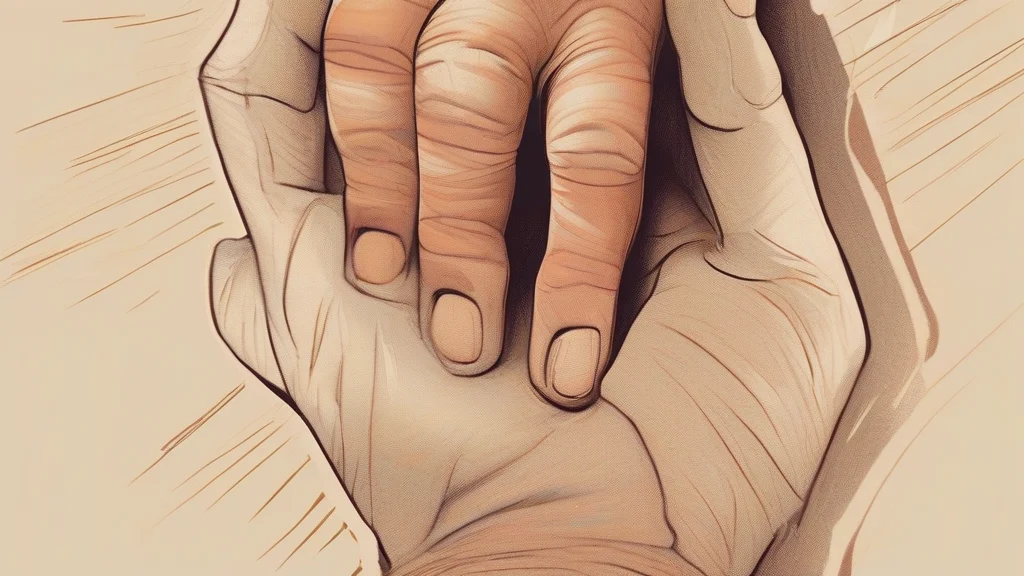
What does unclench mean?
Unclench means to loosen a tight grip or to allow rigidly held muscles to relax. The verb is especially associated with fists, hands, jaws, and grips: a person may unclench their fingers, unclench their jaw after holding it tight, or unclench their grip on a rope or handle. It can also function intransitively, as when clenched hands gradually unclench. Although relatively uncommon in formal writing, unclench is natural in descriptive prose, dialogue, and figurative expressions. Its force comes from the physical contrast it captures: the release of tension. A person might unclench a fist to stop fighting, unclench a jaw to speak more freely, or unclench a grip to let go. The word is related to clench but has the opposite effect, making it especially useful when describing a transition from tension or restraint toward openness and relief.
verbTo loosen or release a tight grip, or to relax clenched muscles. It can be used transitively or intransitively.
- To loosen or release a tight grip.
- To relax muscles held rigidly, especially the jaw or hands.
- To become less tightly closed or clenched.
"He closed his eyes, unclenched his jaw, and finally let out a sigh."
"She unclenched her hands and reached for the door."
"His jaw unclenched as the tension finally left his face."
Unclench is the small but satisfying opposite of clench: it gives tense fingers and jaws permission to relax.
Reviewed by Deb Chak, Editor. AI-assisted content curated by RJS Tech Solutions LLP.
Where does unclench come from?
Unclench was formed in English by combining the reversing prefix un- with clench. Clench derives from Old English clencan, meaning “to close” or “shut,” and the two words retain opposite effects: one closes or tightens, while the other opens or relaxes.
Related word forms
How unclench is actually used
Unclench is common in both British and American English. It is especially associated with the deliberate release of a clenched fist, jaw, or grip, although it can describe any loosening of something held tightly. The un- prefix here has a reversing rather than negative function.
Easily confused with unclench
To clench is to grip or press something tightly, whereas to unclench is to release that pressure and relax.