
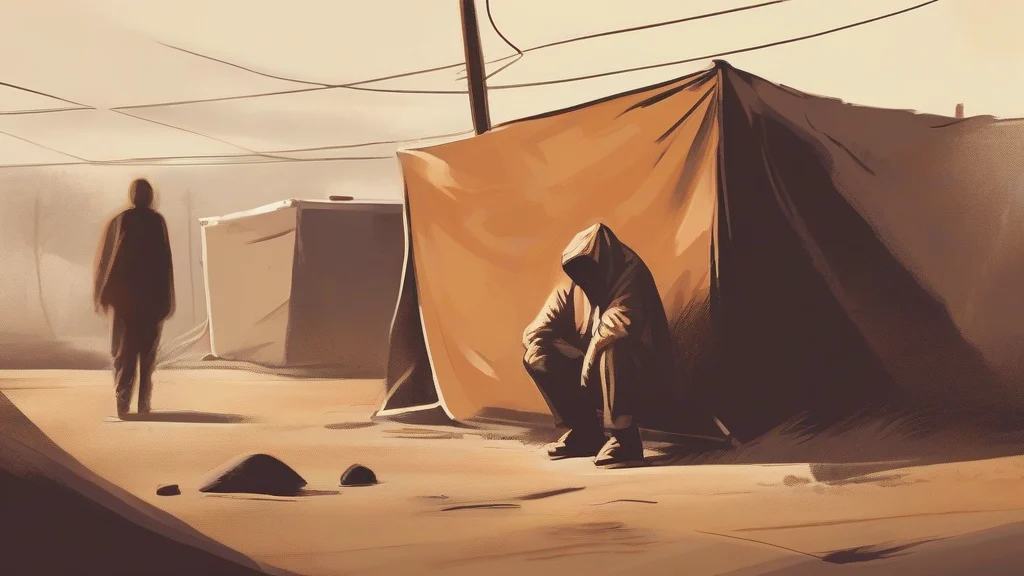
What does unhoused mean?
Unhoused is an adjective describing people who lack stable, adequate, or secure housing. It applies not only to people living on the streets, but also to those staying in shelters, vehicles, encampments, or temporary accommodation. The term is common in social-services, policy, journalism, and housing discussions, where it can emphasize the broader structural conditions associated with homelessness. It can function attributively, as in "unhoused people," or be used collectively as a noun, as in "the unhoused." Although closely related to homeless, unhoused is often perceived as a more formal or comprehensive term because it highlights the absence of secure housing rather than only the absence of a permanent home. The word is useful because it describes a condition affecting people while acknowledging that housing insecurity involves more than a single label or personal circumstance.
adjectiveWithout stable or adequate housing. The term can refer to people living on the streets, in shelters, in vehicles, in encampments, or in temporary accommodation.
- Lacking stable, adequate, or secure housing.
"The organization works with unhoused people by providing shelter, healthcare, and assistance finding permanent housing."
"Volunteers helped unhoused residents access food, medical care, and legal services."
"The report examines how unhoused people navigate the city during winter."
Unhoused shifts attention from personal identity to the urgent social reality of having no safe, stable place to live.
Reviewed by Deb Chak, Editor. AI-assisted content curated by RJS Tech Solutions LLP.
Where does unhoused come from?
Unhoused is an English formation combining the prefix un-, meaning "not" or "without," with housed, a participial form of house. The noun house derives from Old English hūs, meaning a dwelling or home, and the same root underlies related words such as household and homestead. English has long used un- to create negative adjectives; unhoused developed as a descriptive term for people without housing.
How unhoused is actually used
Unhoused is especially common in social-services, policy, journalism, and housing contexts. It may be used as an adjective, as in "unhoused people," or substantivally as a collective noun, as in "the unhoused." Its broader framing can include people who have temporary shelter but no stable housing, although usage varies by organization and region.
Easily confused with unhoused
The terms are closely related, but unhoused is often used as a more formal or broadly framed description that includes people staying in shelters, vehicles, encampments, or temporary accommodation, whereas homeless most commonly emphasizes the absence of a permanent home.
Houseless most directly means having no house or home, while unhoused more broadly concerns the absence of stable or adequate housing.